
Which Home Generator Should You Choose?? A practical, step-by-step guide to selecting the right power capacity to effectively protect yourself against power outages
Power line failures, icing, storms, scheduled maintenance on the grid, and winter overloads caused by freezing temperatures and heat pump operation—under Polish conditions, power outages are not just a theoretical possibility but a real risk.For some households, it’s just an inconvenience (no electricity, internet, or refrigerator); for others, it’s a serious problem (heat pump, automated gas furnace, circulation pumps, home server, remote work).
In this step-by-step guide, you'll walk through the process of choosing a home generator—from defining your needs, to selecting the right power output, to choosing the type of unit and connecting it safely.All in the context of Polish installations, photovoltaics, and popular heating systems.
1.Do you even need a home generator??
Before you start counting kilowatts, ask yourself two questions:
1.1. What are the power outages like in your area??
Gather the facts:
- In the past 2–3 years:
- There were outages lasting more than 2–3 hours?
- there were outages lasting more than 12 hours (storms, icing)?
- The utility (PGE, Tauron, Energa, Enea, innogy/stoen) announced frequent scheduled power outages?
- Do you live in:
- in scattered settlements / in rural areas (more frequent long breaks),
- on the outskirts of the city,
- in a big city (usually shorter breaks, but still feasible)?
If power outages are frequent or prolonged, a generator ceases to be just a “gadget” and becomes a key component of a home’s energy security..
1.2. What Really Needs to Work During a Power Outage?
You can choose from three security levels:
- "Minimum Survival" Mode (2–3 kW)
- a few lamps, a refrigerator, a freezer, chargers, a router, a laptop, a small TV.
- "Comfort" mode (5–7 kW)
- As above, plus central heating pumps, gas boiler electronics, a water pressure booster, a gate, and a few additional outlet circuits.
- "High Comfort / Mini-Off-Grid" Mode (8–12 kW+)
- the ability to power most of the house, including:
- moderate-capacity heat pumps (to a limited extent),
- larger power tools,
- kitchen appliance parts.
- the ability to power most of the house, including:
Powering an entire home with a large heat pump or electric heating from a portable generator is often not cost-effective—we’ll come back to this.
2.The Basics: How a Generator Works and the Different Types?
2.2. What Does a Power Generator Consist Of??
A typical home generator consists of:
- Internal combustion engine – gasoline, diesel, LPG.
- Generators – generate 230 V (single-phase) or 400 V (three-phase) electricity.
- Voltage regulation circuit – conventional (AVR) or inverter-based.
- Output panel – 230 V outlets, or 400 V outlets, output to ATS.
- Frames / Enclosures – portable or stationary.
A generator is not a substitute for a home electrical system—it is simply a power source that must be properly connect via a switch or circuit breaker.
2.2. Inverter-based generator vs. conventional (AVR) generator
- Advantages:
- very stable voltage and frequency,
- safe for sensitive electronics (computers, NAS servers, audio equipment),
- lower operating noise,
- often compact and portable.
- Disadvantages:
- a higher price per kW,
- usually lower power ratings (typically 1–4 kW, though there are more powerful models).
Standard Generators (with AVR):
- Advantages:
- a wider power range (from 2 kW to over a dozen kW and more),
- a better price per 1 kW,
- They work well with motor-driven devices (pumps, power tools).
- Disadvantages:
- lower voltage quality than an inverter (although the AVR improves stability),
- higher noise levels,
- less compact.
For an apartment, a small townhouse, or to power electronic devices — an inverter is a great choice.
To power a larger number of appliances, pumps, and parts of the house – classic generators with AVR are usually chosen.
2.3. Single-phase (230 V) or three-phase (400 V)?
In Poland, most homes have a three-phase (so-called “high-voltage”) connection, but:
- If you don't have any actual 400 V loads (e.g., a large motor, certain types of pumps, a workshop), in 90% of cases a single-phase generator is the better choice for your home,
- with a 3-phase generator the power must be distributed evenly across all three phases – otherwise, some of the power goes unused, and the generator is overloaded on one of the phases.
Example problem:
The 9 kVA 3-phase generator has approx..3 kW per phase.If most of your “critical” devices are connected to a single phase, you actually only have 3 kW available, even though the generator’s nameplate says it “has 9 kVA”.
That is why the following are often chosen for homes:
- 1-phase 230 V generator with solid continuous power,
and the switchgear includes emergency subcircuits on a single phase (the electrician's role).
If you want to better understand the differences, check out the EWIMAX guide on single-phase and three-phase generators.
3.Fuel and design: gasoline, diesel, LPG, portable or stationary?
3.1. Fuel Type
- Advantages:
- lower purchase price,
- easy startup, even at lower temperatures,
- quieter than most diesel engines.
- Disadvantages:
- higher operating costs (gasoline is more expensive per liter than diesel or LPG),
- shorter service life under continuous operation.
- Advantages:
- lower fuel consumption (per kWh),
- better suited for long-term operation and higher power output.
- Disadvantages:
- the higher price of the device,
- more noise,
- heavier.
LPG / dual-fuel (gasoline + LPG) generators:
- Advantages:
- cheaper fuel, longer runtime with a large tank,
- The fuel doesn't go bad the way gasoline does in jerry cans,
- often quieter and "smoother" operation.
- Disadvantages:
- a slightly higher purchase price than purely gasoline-powered vehicles,
- the need for proper storage of LPG cylinders.
For a typical single-family home:
- gasoline / gasoline + LPG – the most common, sensible choice,
- diesel – for higher power ratings, homes with a small business or workshop, when prolonged, frequent operation under load is planned.
3.2. Portable or Desktop?
Portable Generator:
- mounted on a frame, with handles, often on wheels,
- lower power (up to a dozen or so kW),
- for occasional use: breakdowns, recreation, yard work, construction.
Stationary Power Generator:
- heavy-duty enclosure, often soundproofed,
- permanently installed on the exterior of the building,
- often with automatic start (ATS) and a larger fuel tank.
For most homeowners, a portable single-phase generator rated at 2–7 kW or a more powerful 8–12 kW model, connected via a mains-off-generator switch.
4.Selecting the Power Rating of a Generator Set – General Principles
4.1. Continuous Power vs. Maximum Power
You'll usually find two values on the nameplate:
- maximum power (peak, startup) – can only be sustained for a short time,
- continuous (rated) power – this is the value that interests you the most.
For planning purposes, assume continuous power and add a 20–30% margin.
4.2. Inrush currents—the biggest pitfall
Devices with a motor (compressor, pump) draw 2–5 times more power than during normal operation.
Sample values (approximate):
- refrigerator: 100 W during operation / 300–500 W at startup,
- freezer: 150 W during operation / 400–700 W at startup,
- Central heating pump: 60 W during operation / 150–250 W at startup,
- water pump: 800 W during operation / 2–3 kW at startup,
- submersible pump: 1 kW during operation / 3–5 kW at startup.
The generator must be able to handle with the simultaneous startup of several loads or the most “demanding” startup in the system.
5.Power Selection Scenarios – 2–3 kW, 5–7 kW, 8–12 kW
Below are three typical scenarios from Polish homes.
5.1. Scenario 1: 2–3 kW – Basic Protection
For whom?
- apartments in a high-rise building,
- row houses,
- single-family homes where the heating system operates independently of electricity (e.g., gravity-fed systems, coal-fired stoves without electronic components).
Typical receivers:
- refrigerator: OK.100 W (500 W startup),
- freezer: 150 W (700 W startup),
- router, laptop, TV: 200–300 W total,
- several LED lamps: 50–100 W,
- chargers, small electronic devices.
Total operating power: approx..600–800 W
Reserve power for startup + buffer: 2–3 kW.
What to choose?
- 2–3 kW inverter generator – ideal for an apartment, quiet, safe for electronics,
- in a single-family home—it can also be a classic 2–3 kW with AVR, if price is a factor and you sometimes need to plug in power tools as well.
5.2. Scenario 2: 5–7 kW – a comfortable single-family home
For whom?
- houses made of:
- a gas boiler (with electronic controls),
- central heating pumps,
- a possible water pump,
- garage door/driveway gate,
- remote work.
Common emergency receivers:
- gas boiler + controller: 100–200 W,
- 2–3 CO pumps: 3 × 60 W = 180 W (approx..500 W (start-up),
- refrigerator + freezer: OK.250 W (1.2–1.5 kW total startup power),
- water pump: 800 W (2–3 kW startup),
- router, computer, TV: 300–500 W,
- lighting for parts of the house: 100–200 W,
- a few general-purpose outlets (for chargers, small appliances).
Total operating power: usually 1.5–2.5 kW
Inrush currents: may exceed 4–5 kW if several devices start up at the same time.
Power recommendation:
- 1-phase generator with 5–7 kW continuous power with a start-up reserve,
- best with an AVRso that the voltage is more stable.
With sensible load management (such as not turning on a 2-kW kettle at the same time the water pump starts up), this generator will allow the home to function relatively comfortably during longer power outages.
5.3. Scenario 3: 8–12 kW – high comfort / small home-based business
For whom?
- large single-family homes,
- homes where business activities are conducted (workshop, office, server room),
- farms with a larger number of pumps, tools, and electronic equipment.
Typical receivers:
- All of the items from the previous scenario, plus:
- power tools (grinders, saws, air compressors),
- larger pumps (especially submersible pumps),
- additional kitchen circuits (e.g., dishwasher, microwave—but not all at once).
Total operating power: 3–5 kW
Starting currents: 6–10 kW (depending on pumps, compressors, and workshop).
Power recommendation:
- 1-phase or 3-phase generator, 8–12 kW (depending on the loads),
- More "semi-professional" models are recommended—with a sturdier frame, better sound insulation, and, if possible, compatibility with ATS.
6.A Generator vs. a Heat Pump and Electric Heating—What You Need to Know?
A heat pump (especially an air-source heat pump) is one of the most sensitive loads:
- needs stable voltage and frequency (preferably a generator with a good AVR or an inverter),
- has a starting current that is as much as 3–5 times greater than the operating power—especially older models without soft-start,
- For a home with an 8–10 kW heat pump (heating capacity), fully powering it from a generator may require:
- generator set with a 10–15 kW of continuous power,
- And you have to take into account the pump's limited operating range (temperatures, defrosting).
In practice, it is often the case that:
- It is not cost-effective to design a heat pump system for "full heating",
- instead:
- It is assumed that during longer power outages, an an alternative heat source (fireplace, wood-burning stove, gas/oil heating),
- The unit powers the heat pump circuit, the electronics, and the most critical systems, but not necessarily full-power heating.
With electric heating (heating mats, convectors, infrared panels), the situation is even more difficult:
- Fully meeting a home’s heating demand (e.g., 10–15 kW) would require absurdly large units,
- is usually limited to powering part of the system or providing emergency heating for one or two rooms.
In such scenarios, it is essential to consult with an electrician and accurately calculating the power requirements and contingency plans.
7.How to Choose the Right Generator Capacity on Your Own – A Step-by-Step Checklist
Below is a mini-checklist that you might even want to print out and fill out before making a purchase or speaking with an advisor (e.g., at EWIMAX):
- Make a list of the devices that MUST continue to function in the event of a failure.
- separately: refrigerator, freezer, boiler, central heating pumps, water pressure booster, router, lighting, electronics, gates, heat pump (if it is to operate).
- Find the rated power (W / kW) for each device.
- from the nameplate or the manual.
- Select devices with a motor or compressor.
- refrigerators, freezers, water pressure pumps, pumps, compressors – will have higher starting power.
- Estimate the starting current.
- If exact data is not available, use the following values: 2–3 times the rated power for small motors, 3–5 times for larger pumps.
- Calculate the total power.
- Add up the rated power of all devices that can operate simultaneously.
- Specify the maximum "simultaneous startup scenario".
- e.g., startup of the refrigerator + freezer + water pressure booster + central heating pump.
- Add a minimum stock.20–30%.
- both the total operating power and the expected startup peaks.
- Round up to the nearest “typical” generator power rating.
- For example, if the result is 4.2 kW, look for a continuous power rating of 5–6 kW.
- Check the type of system in your home.
- Is a 400 V three-phase power supply required, or is a 230 V single-phase supply with separate emergency circuits sufficient?.
- Consult an electrician about the plan.
- especially if you want to power a heat pump, a PV system, larger pumps, or an entire switchgear panel.
With this list, you can move on to selecting a specific model and easily filter the selection of generators available at EWIMAX.
8.Connecting a generator safely to your home's electrical system
The generator is only half the battle.The second—and more important—part is securely connecting it to the systemso that:
- not to electrocute anyone working on the power line,
- not to damage the equipment at home,
- do not damage the unit itself.
8.1. Why You Shouldn't "Run Electricity Through an Outlet"?
A popular "trick" for supplying power from a generator via a plug into an outlet is:
- noncompliant with regulations,
- extremely dangerous for:
- emergency power service workers (you might accidentally restore power to a line that should be de-energized),
- household members (lack of safety measures, fire hazard).
You is not allowed — no matter how many people say, “It works for me”.
8.2. Mains–0–Generator Switch
The basic, safe solution is:
- mechanical mains–0–generator switch (also known as a power source switch),
most often installed near the main switchboard.
Function:
- item "grid" – a house powered by the utility grid,
- position "0" – everything disconnected (safety during switching),
- item "generator" – the house (or selected circuits) powered by the generator; the system is disconnected from the grid.
Selecting and installing a switch is a job for a licensed electricianwho:
- determine the power and type of the generator,
- will select the appropriate wire gauge, protective devices, and grounding,
- will designate priority circuits (e.g., bathroom, kitchen, central heating, server room),
- will ensure that the diagram is correct and complies with the network operator's requirements.
8.3. ATS – Automatic Transfer Switch
ATS (Automatic Transfer Switch):
- automatically detects a power outage,
- starts the generator,
- switches the home's power supply to the generator,
- When mains power is restored, it switches back to the mains and shuts down the generator.
Useful in situations where:
- there is no one on site to start the generator manually (vacation homes, farm buildings),
- What matters is uninterrupted power supply (server rooms, alarm systems, pumps).
EWIMAX offers the following generators:
- designed to work with ATS,
- come equipped with an ATS module as standard (particularly certain desktop and semi-professional models).
If you're interested in this type of automation, check out the ATS automation modules.
Installing an ATS also requires the assistance of an electrician.
8.4. Grounding and Protection Against Electric Shock
When connecting the generator:
- It is necessary to proper grounding in accordance with the manufacturer's instructions,
- The selection of the neutral point configuration (TN-S, TN-C-S, TT) should be consistent with the switchgear and the operator's requirements,
- It is important to note the use of residual current devices (RCDs)—improper installation can cause them to trip or fail to function properly.
All of this is part of the installation design — the unit must be a deliberate part of that design, not a “haphazard add-on.”.
8.5. Generators, Photovoltaics (PV), and Energy Storage
Homes with PV systems and energy storage have a more complex power supply logic:
- The PV inverter must safely disconnect from the grid in the event of a power outage (so-called anti-islanding),
- Some hybrid inverters can create their own “energy island” with energy storage and selected circuits in the home.
When using the generator, you will need:
- Check the inverter manual to see if and how it can work with an external power source (generator),
- matching the generator's characteristics (voltage, frequency, sine wave quality) to the inverter's requirements,
- Taking into account the grid operator's (OSD) requirements regarding island operation.
Therefore, in the case of PV + energy storage + generator , cooperation is necessary:
- a licensed electrician / electrical system designer,
and the unit should be selected to meet these requirements (this is where a wide range of models and support from consultants, such as EWIMAX, come in handy).
9.The Most Common Mistakes When Choosing and Using a Generator
9.1. Underestimation of power (especially for pumps and pressure boosters)
- A classic: “A 3-kW generator is enough for everything I need,” and then it turns out that:
- The pressure pump won't start,
- the submersible pump trips the safety switches,
- The refrigerator is "humming," but it won't start.
- Reason: omission of starting currents.
How to Avoid?
Use the checklist from Chapter 7 and always leave a 20–30% margin.
9.2. Oversizing for Rarely Used Loads
On the other hand:
- buying a 10–12 kW generator just to occasionally power a single pump, when 5–6 kW would be enough,
- results in:
- a higher purchase price,
- higher fuel consumption when operating at low load,
- more noise and larger dimensions.
How to Avoid?
Realistically define an emergency scenariorather than the most extreme “unrealistic” scenario.
9.3. Choosing a 3-phase generator when it is not necessary
- A common misconception: “I have three-phase power at home, so I need a three-phase generator.”.
- Result:
- complex load distribution,
- failure to utilize a large portion of the generator set's power,
- Start-up problems on a single phase under load.
How to Avoid?
If there are no the necessary 400 V outlets, in most homes a single-phase generator and dedicated emergency circuits.
9.4. Incorrect connection (outlet to outlet, no power source selector switch)
- Consequences: danger to human life on the network, fire hazard, equipment damage.
- This isn't a "clever workaround," but rather a dangerous botched job.
How to Avoid?
Always use the mains–0–generator switch or ATS, installed by an electrician.
9.5. Lack of Regular Testing and Maintenance
- The generator has been sitting unused for several years, and when a breakdown occurs:
- won't start,
- the fuel has "gone bad,"
- The oil is long overdue for a change,
- dead battery (during electric start).
How to Avoid?
- Once every few months:
- start the generator,
- assign him actual customers,
- Check that the power switch is working properly.
- Change the oil and filters according to the manufacturer's recommendations.
9.6. Working in poor conditions (ventilation, noise, exhaust fumes)
- Generators must not be operated in enclosed spaces (garage, basement) without adequate ventilation—risk of carbon monoxide poisoning.
- You need to make sure to:
- a safe distance from walls and windows,
- protection from rain (roof, awning),
- consideration of noise (especially in row housing).
10.How to Choose a Specific Generator in Practice (Using EWIMAX as an Example)
Once you've calculated the power requirements and determined the scenario, all that's left is to choose a specific model.In practice, the “filter-to-model” approach works well—especially in an online store like EWIMAX.
10.1. Step 1 – Select the category and type of unit
At EWIMAX, you'll find:
- generators gasoline-powered (the most popular for homes),
- generators diesel (more powerful, for longer operation),
- generators inverter-based (quieter, for electronics),
- generators portable and stationary,
- models Single-phase (230 V) and 3-phase (400 V),
- units with an ATS function or ready for connection to it.
To get started, you can:
- narrow down the fuel type (e.g., gasoline / gasoline + LPG),
- select single-phase for a typical home,
- Select the power range (e.g., 2–3 kW, 5–7 kW, 8–12 kW).
10.2. Step 2 – Determine the power range according to the checklist
Using the calculations from Chapter 7:
- Select power the next higher relative to the calculated demand,
- Keep in mind that the EWIMAX lineup includes the following models:
- about.2–3 kW – basic protection,
- about.5–7 kW – a comfortable single-family home,
- about.8–12 kW – high comfort/small business.
Brands available at EWIMAX, such as CEDRUS, DAEWOO, LONCIN, and DEDRA, offer a full range of power options, so it’s easy to choose a generator that’s perfectly suited to your specific needs.
10.3. Step 3 – Pay attention to the key parameters
When comparing models, the following factors are particularly important:
- Continuous power (kW / kVA) – this is what you base your selection on.
- Voltage Regulation Type – inverter / AVR.
- Start-up Type – manual (cable), electric (battery), combination.
- Fuel tank capacity – determines the operating time without refueling.
- Noise level (dB) – important in densely built-up areas.
- Optional Equipment:
- hour meter,
- voltage indicator,
- overload protection,
- Output to ATS or built-in ATS module.
Use filters and comparison tools, and then narrow down your selection to 2–3 models that best meet your needs.
10.4. Step 4 – Adapt to the actual installation conditions (in collaboration with an electrician)
Before making your final purchase:
- Consult an electrician about the following:
- Mains–0–Generator Switch / ATS,
- isolation of emergency circuits,
- integration with PV and a heat pump (if applicable),
- Make sure that the selected unit:
- has the appropriate ports and outputs (e.g., for an ATS),
- meets the requirements of the PV inverter (if it is to be used in conjunction with it).
You can also prepare a list of devices, their power ratings, and your expected usage scenario, and contact an EWIMAX advisor, who will help you select a model based on the generator’s specifications (without replacing the role of an electrician in designing the installation).
11.Summary – How to Choose a Home Generator?
To answer the question “which generator is best for your home to choose,”?”, it’s worth keeping a few rules in mind:
Start with the needs, not the model.
Specify what should continue to function in the event of a failure and in which mode (minimum, comfort, high comfort).Calculate the actual power requirement.
Take into account the continuous power and inrush currents, and add a 20–30% margin.In most homes, a single-phase generator is a better choice.
Choose the 3-phase option only if you really need 400 V and can distribute the load evenly across the phases.Select the appropriate device type:
- inverter – quiet, suitable for apartments and sensitive electronics,
- Classic with AVR – for heavier loads, pumps, and household appliances.
Think about a heating scenario.
Powering a large heat pump or electric heating system entirely from a portable generator is usually not cost-effective.Safety above all.
Only the mains–0–generator switch or ATS, proper grounding, no combinations via the outlet.Test and Service.
The generator is supposed to work not just “on paper,” but in reality—in the event of a failure.
If you've already done a preliminary calculation of the power and know which phases and fuel types you're interested in, you can:
- Check the category of power generators on EWIMAX,
- use the filters (power, fuel type, 1F/3F, ATS, inverter/AVR),
- and then check out the EWIMAX guides: “Which Generator for Your Home?” and “Generators—Which One to Buy?” to help you narrow down your choice of a specific model.
A well-chosen and properly connected generator will provide real protection for your home—not just a “machine bought just in case,” but a proven part of your home emergency plan.
Sources
- PGE Dystrybucja – “Guidelines for the Safe Integration of Micro-Installations into the Power Grid” – https://pgedystrybucja.en
- Tauron Dystrybucja – “Technical Requirements for Power Generation Sources Connected to the Low-Voltage Grid” – https://tauron-dystrybucja.en
- Distribution Network Operation and Maintenance Manual (IRiESD) – selected DSOs – https://ure.gov.en
- Resources from power generator manufacturers (AVR, inverter, ATS, starting currents): DAEWOO Power Products – https://daewoo-power.com, CEDRUS – https://cedrus.org.pl, DEDRA – https://dedra.pl, LONCIN – https://loncin.com
- Technical guides on selecting generator set power ratings and motor starting currents: IEC 60034, industry publications – https://iec.ch
A step-by-step guide to help you choose the right generator for your home.It explains when a generator makes sense, how to calculate the required power (including starting currents), how inverter generators differ from traditional AVR generators, when to choose a single-phase or three-phase model, and how to select the fuel (gasoline, diesel, LPG) and the design (portable or stationary).Discusses scenarios for 2–3 kW, 5–7 kW, and 8–12 kW, the specifics of powering heat pumps and electric heating, integration with solar PV and energy storage, as well as the principles of safe connection via a grid–0–generator switch or ATS.Publication date: May 3, 2026.Tags: generator, power selection, emergency power supply, single-family home, heat pump, solar power, ATS, system safety.
Recommended
LONCIN LC8000D-AS-1F POWERFUL 230V AVR 6.5kW POWER GENERATOR - EWIMAX OFFICIAL DISTRIBUTOR - AUTHORIZED LONCIN DEALER


LONCIN EHOM EP1650-3 POWER STATION BANK ENERGY STORAGE AGREGATE POWERBANK 1024Wh power 1650VA EWIMAX - OFFICIAL DISTRIBUTOR - AUTHORIZED LONCIN DEALER

CEDRUS AG3-1F GENERATOR GENERATOR 3 KW 3000W

CEDRUS AG10E-3F GENERATOR AG10 AVR 3PHASE XXL 230V/400V 10 KW 10000W- OFFICIAL DISTRIBUTOR- AUTHORIZED DEALER CEDRUS

CEDRUS AG7E-3F RATO GENERATOR 16HP 6.8 kW 6800W 230V/400V - EWIMAX - OFFICIAL DISTRIBUTOR - AUTHORIZED DEALER CEDRUS

CEDRUS AG5 GENERATOR 5.5 KW 5500W 230V AG5-1F - EWIMAX - OFFICIAL DISTRIBUTOR - AUTHORIZED CEDRUS DEALER

OLEO MAC OM LINE PZU 25 DCS AC GENERATOR 230V with AVR 2,2 KW- OFFICIAL DISTRIBUTOR - AUTHORIZED DEALER OLEO MAC

OLEO MAC OM LINE PZU 35 DCS AC GENERATOR 230V with AVR 3,1 KW - OFFICIAL DISTRIBUTOR - AUTHORIZED DEALER OLEO MAC


OLEO MAC OM LINE PZU 80E DAS AC GENERATOR 230V 400V with AVR ESTART STARTER 6,5 KW - OFFICIAL DISTRIBUTOR - AUTHORIZED DEALER OLEO MAC
LONCIN LC2500-AS POWERFUL GENERATOR 2x230V AVR 2,2kW - EWIMAX OFFICIAL DISTRIBUTOR - AUTHORIZED LONCIN DEALER
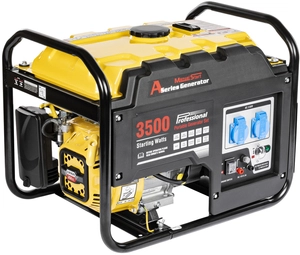
LONCIN LC3500-AS POWERFUL GENERATOR 2x230V AVR 3,1kW - EWIMAX OFFICIAL DISTRIBUTOR - AUTHORIZED LONCIN DEALER

LONCIN LC6500D-AS POWERFUL 230V / 400V AVR 5.5kW GENERATOR - EWIMAX OFFICIAL DISTRIBUTOR - AUTHORIZED LONCIN DEALER

CEDRUS IN1000R GENERATOR INVERTER GENERATOR 230V INVERTER CASE 1000W EWIMAX - OFFICIAL DISTRIBUTOR - AUTHORIZED CEDRUS DEALER

CEDRUS IN2000R INVERTER GENERATOR INVERTER GENERATOR CASE 230V 1900W EWIMAX - OFFICIAL DISTRIBUTOR - AUTHORIZED CEDRUS DEALER

CEDRUS IN3000E GENERATOR INVERTER GENERATOR CASE 230V 3.3 KW ESTART - STARTER EWIMAX - OFFICIAL DISTRIBUTOR - AUTHORIZED CEDRUS DEALER

LONCIN LC2000I GENERATOR INVERTER GENERATOR CASE INVERTER GENERATOR 230V 1.8 KW EWIMAX - OFFICIAL DISTRIBUTOR - AUTHORIZED CEDRUS DEALER

LONCIN LC3000I GENERATOR INVERTER GENERATOR CASE 230V 2.5 KW EWIMAX - OFFICIAL DISTRIBUTOR - AUTHORIZED CEDRUS DEALER
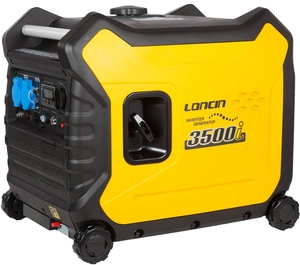
LONCIN LC3500 I LONCIN LONCIN LC3500 I GENERATOR INVERTER GENERATOR 230V 3.3 KW ESTART - STARTER Atlas Copco P3500I loncin lc3500i - EWIMAX - OFFICIAL DISTRIBUTOR - AUTHORIZED DEALER CEDRUS
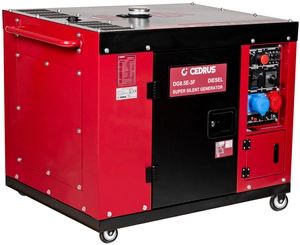
CEDRUS DG8.5E-3F GENERATOR GENERATOR 8.5kW / 18hp 230/400V AVR SILENT VERSION CEDRUS 8.5 kW KD1100F DIESEL


CEDRUS DG7E-3F GENERATOR GENERATOR 7.1kW / 12 hp 230/400V AVR SILENT VERSION CEDRUS 7.1 kW KD195FC DIESEL
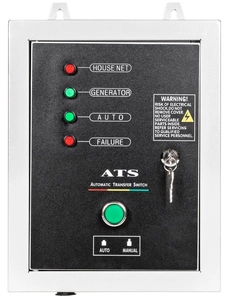
CEDRUS ATS-DG2 AUTOMATION MODULE ATS SZR AUTOMATION FOR CEDRUS DG12E-3F UNITS -OFFICIAL DISTRIBUTOR-AUTHORIZED CEDRUS DEALER

CEDRUS DG12E-3F GENERATOR GENERATOR 12kW / 20 hp 230/400V AVR SILENT VERSION CEDRUS 12 kW KD292FA DIESEL
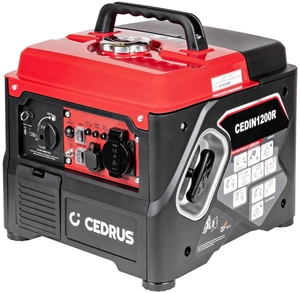
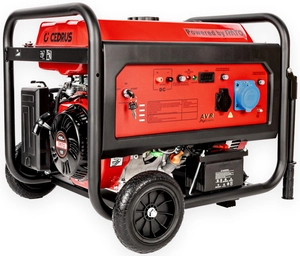
CEDRUS AG6E-1F GENERATOR 230V 6KW 6000W - EWIMAX - OFFICIAL DISTRIBUTOR - AUTHORIZED CEDRUS DEALER

CEDRUS AG8E-1F GENERATOR 230V 8,5 KW 8500W - EWIMAX - OFFICIAL DISTRIBUTOR - AUTHORIZED CEDRUS DEALER
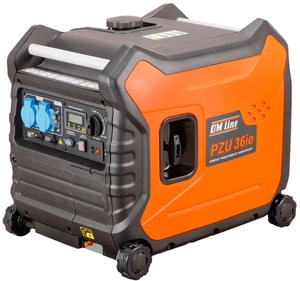
OLEO-MAC OM LINE PZU 36 IE GENERATOR INVERTER GENERATOR 230V 3.3 KW ESTART - STARTER EWIMAX - OFFICIAL DISTRIBUTOR - AUTHORIZED CEDRUS DEALER

LONCIN EP500 POWER STATION BANK ENERGY STORAGE POWERBANK 560Wh power 500VA EWIMAX - OFFICIAL DISTRIBUTOR - AUTHORIZED DEALER CEDRUS
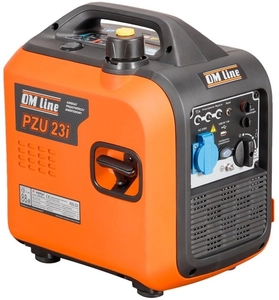
OLEO-MAC OM LINE PZU 23 I GENERATOR INVERTER GENERATOR 230V 2,0 KW SUITCASE - STARTER EWIMAX - OFFICIAL DISTRIBUTOR - AUTHORIZED OLEO-MAC DEALER
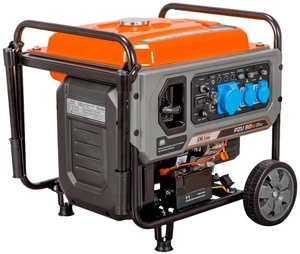
OLEO-MAC OM LINE PZU 90 IE GENERATOR INVERTER GENERATOR 230V 7.5 KW ESTART - STARTER EWIMAX - OFFICIAL DISTRIBUTOR - AUTHORIZED OLEO-MAC DEALER
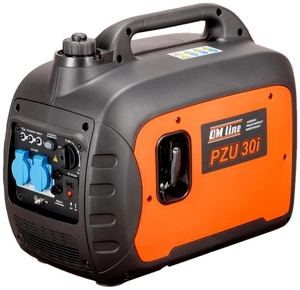
OLEO-MAC OM LINE PZU 30 I GENERATOR INVERTER GENERATOR CASE OLEO PZU30 230V 2,5 KW - STARTER EWIMAX - OFFICIAL DISTRIBUTOR - AUTHORIZED OLEO-MAC DEALER

LONCIN LC7500I INVERTER GENERATOR 230V 7.5 KW ESTART - STARTER Atlas Copco P6000I - EWIMAX - OFFICIAL DISTRIBUTOR - AUTHORIZED DEALER CEDRUS
