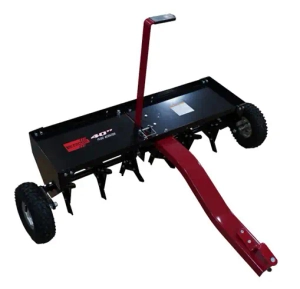
Which lawn aerator should you choose, and where's the best place to buy one online?? A Comprehensive Guide for Discerning Lawn Owners (Using Online Stores Selling Professional Gardening Equipment as an Example)

Maintaining a thick, healthy lawn is no longer a “secret art” these days.More and more garden owners are realizing that a lawn mower alone isn't enough, and that scarification is the key step.Hence the growing interest in the question which aerator to choose and where to buy one at a reasonable price—preferably at a specialized online garden store, rather than randomly at the first big-box store you come across.
In this step-by-step guide, you’ll go from understanding what a lawn aerator actually does, through choosing the type and specifications, all the way to comparing prices at a supermarket and a professional online store, using EWIMAX as an example: —a Polish online store offering mid-range and high-end equipment..
Which Aerator Should You Choose??Start by understanding what it's for
Before you start comparing models, it’s a good idea to fully understand what a dethatcher does and how it differs from other lawn care tools.
What does a lawn aerator do, and why do you need one in your garden??
Lawn Aerator:
- cuts the turf vertically (hence the name “vertical”) using blades mounted on a rotating shaft,
- removes thatch – a compacted layer of dead grass blades, plant debris, and root thatch,
- removes moss and loose debris,
- improves access to air, water, and fertilizers to the root zone.
Effect?A few weeks after treatment, the lawn is denser, spreads more readily, and is less susceptible to disease and drought.Scarification is typically performed 1–2 times a year (usually in the spring and, for sturdier lawns, in the fall).
De-thatcher, aerator, cultivator—how do they differ, and which one do you really need??
These three terms are very often confused, and misunderstanding the differences can lead you to buy the wrong device—one that isn't actually what you need.
Scarifier
- Function: scoring the turf, removing thatch and moss.
- Result: the lawn is very “thinned out” and will need to be restored afterward (reseeding, fertilizing, watering).
- Frequency: 1–2 times a year; this is a rather intensive treatment.
Aerator
- Function: soil aeration of the soil (often with pins or tubes), without intensive cutting or tearing of the turf.
- Result: loosening of the topsoil, improved water and air infiltration, but without as much disruption as aeration.
- Frequency: even several times per season; a gentler procedure.
Cultivator / rotary tiller
- Function: working the soil, mixing, aerating, preparing the ground for new plantings, vegetable gardens, or laying a lawn.
- It is not intended for maintaining an established lawn—you can easily damage the turf with it.If you're looking for equipment for this kind of work, garden tillers are in a category of their own .
[BOX: “Lawn Aerator vs. Aerator vs. Cultivator – Which One to Choose?”]?"
– You have an established lawn with a lot of moss/thatch, and you want to revitalize it → dethatcher (optionally with a replaceable aerator roller).
– You mainly want to improve aeration, but the lawn is in fairly good condition → aerator.
– Are you preparing the soil for a new lawn or flower beds? → rotary tiller/rotary cultivator.]
In practice, for the discerning lawn owner, the optimal choice is often a dethatcher that can be fitted with an aerator roller —a trend that was very noticeable during the 2024/2025 seasons.
Types of aerators: manual, electric, battery-powered, gas-powered
The next step is to choose the type of drive.Each type has its own characteristics, advantages, and limitations.
Hand-held aerator
- Advantages:
- the cheapest option (approx..(80–250 zł),
- quiet, no motor, no cables or batteries,
- virtually maintenance-free.
- Disadvantages:
- requires a lot of effort and time,
- narrow working width,
- impractical above approx..150–200 m².
It might be enough for a small garden next to a townhouse, but it will quickly become a hassle if the area is larger.
Electric Aerator (230 V)
- Advantages:
- Best value for money in small and medium-sized gardens,
- Prices are generally okay.400–1,000 PLN,
- A power output of 1,300–1,800 W is more than enough for most home lawns,
- relatively lightweight, easy to use.
- Disadvantages:
- The cable restricts your movement—you have to be careful not to cut it,
- I need easy access to a power source in the garden.
A good choice for most lawn owners for about.600–800 m², provided the layout of the lot allows for easy maneuvering with an extension cord.
Cordless Aerator
- Advantages:
- complete freedom of movement, no cord,
- often part of a larger battery platform (a single set of batteries for several devices),
- quieter and more environmentally friendly to use than a gas-powered one.
- Disadvantages:
- higher price: ok.700–1,800+ PLN (depending on the battery pack),
- Operating time is limited by battery capacity; for larger areas, you'll need 2–3 batteries or breaks to recharge,
- requires careful battery management (storage, charging).
This a segment experiencing very rapid growth during the 2024/2025 seasons — more and more users are choosing cordless scarifiers as a convenient addition to lawn mowers , string trimmers, and leaf blowers in a single system.
Petrol scarifier
- Advantages:
- maximum power and performance, engines typically with a displacement of 160–212 cm³,
- best for large and challenging lawns (old, overgrown, heavily thatched),
- No need for electricity or batteries.
- Disadvantages:
- Prices typically start at around.1,200 to 3,000+ PLN (semi-professional and professional models),
- noise, exhaust fumes, increased weight,
- Regular maintenance required (oil, filter, spark plug),
- sometimes the need for registration or oversight in companies.
In practice, it’s worth considering a gas-powered aerator for areas of approximately.600–1,500 m² and up; for areas larger than 1,500 m², it is often the best solution—especially if the lawn is heavily used.
Selecting a Lawn Aerator Based on Lawn Size and Usage Intensity
The question itself "Which scarifier should I choose?" only makes sense once you clearly define:
- How big is your lawn?
- what condition it's in,
- How often do you plan to have the treatments,
- Are there any additional applications (e.g., aeration)?.
Lawn area – primary selection criterion
[TABLE: “Selecting the Right Type of Lawn Aerator for Your Lawn”
Columns:
- Lawn area
- Recommended type of aerator
- Approximate working width
- Typical application
Sample lines:
– Up to 150–200 m² | manual or electric, 30–32 cm | garden next to a townhouse
– 200–600 m² | electric, 32–38 cm, or cordless | most standard gardens
– 600–1,500 m² | powerful cordless or gas-powered 38–40 cm | large gardens, heavy-duty use
– Over 1,500 m² | gas-powered (often semi-professional) | large lawns, businesses, sports facilities]
Lawn condition and intensity of use
- A new, well-established lawn, with little moss and a light layer of thatch
– All you need is an electric motor or a battery; you don't have to invest in an internal combustion engine right away. - An older lawn with compacted sod, a lot of moss, and weeds
– Consider a more powerful model (more powerful engine, sturdier blades); for large areas, choose a gas-powered model. - A lawn that gets heavy use (children, dogs, sports)—you want to maintain it more often
– A machine with interchangeable rollers (scarification + aeration) makes sense; preferably an electric or battery-powered model with sufficient power.
Key Technical Specifications – What to Look for When Choosing?
Once you've narrowed down your selection to a power type and approximate class, move on to comparing specific specifications.In practice, these factors determine whether the equipment will be comfortable and effective.
Working width
- Typical household values: 32–40 cm.
- The wider the working width, the faster the work, but:
- greater weight,
- greater power demand,
- sometimes less maneuverable in tight spaces.
For small and medium-sized gardens, 32–38 cm works well; 40 cm and above makes sense for large, open lawns.
Power (electric and battery-powered) and engine displacement (internal combustion)
- Electric:
- 1,300–1,500 W – sufficient for small to medium-sized lawns with regular maintenance,
- 1,600–1,800 W – a better choice for tougher conditions (thick felt, moss).
- Battery-powered:
- The actual “power” can be seen in the battery capacity (Ah) and the system voltage (e.g., 36 V, 40 V, 2×18 V),
- The larger the area, the more cost-effective a set with two batteries and a fast charger is.
- Internal combustion:
- A displacement of 160–212 cm³ provides plenty of power in reserve; the quality of the engine (brand-name vs. “no-name”) is also important.
Working Depth and Adjustment
The typical working range for a home-use scarifier is usually:
- about.from –12 mm to +4/+6 mm (negative values – cutting depth into the turf; positive values – “transport”/gentle setting).
- Depth adjustment should be:
- stepwise or continuous,
- easy to use (lever, knob),
- stable (does not shift on its own under load).
The value is too low—you won't be able to clean the felt properly.Too deep—you'll damage the turf and the roots.
Roller type: blades or springs?
Knife roller (steel, rigid blades)
- deep, effective aeration,
- a clean cut through the felt and moss,
- greater strain on the engine requires a reasonable depth setting.
Spring roller (wires, spring fingers)
- gentler combing (more like a stiff "comb"),
- more like aeration or raking than true scarification,
- less risk of damaging the lawn, but also less effective results on severely neglected lawns.
The optimal solution is a model with interchangeable rollers — a separate blade roller for basic scarification and a spring-loaded roller for gentle cleaning or aeration.
Waste basket
- The typical capacity is 35–45 liters for household models,
- It's worth remembering that you’ll be emptying the grass catcher often anyway —thorough dethatching produces a lot of waste,
- More important than capacity itself is:
- ergonomics of putting on and taking off,
- secure fastening (so the basket doesn't "bounce" and lose material).
It's not worth overpaying for a larger basket if it negatively affects other features.
Housing material
- Plastic (ABS, reinforced plastics):
- lighter,
- corrosion-resistant,
- in mid-range devices, more than sufficient for normal use.
- Metal (steel):
- greater resistance to mechanical damage,
- heavier,
- potentially susceptible to corrosion without an appropriate coating.
In the consumer and semi-professional segments, a well-designed, thick plastic housing is often the best compromise.
Self-propulsion
- In gasoline-powered and more advanced models, you'll find wheel drive.
- For areas larger than approx..1,500 m² and, when used in a semi-professional setting, significantly reduces operator fatigue.
- In small gardens, it's usually unnecessary.
Common Mistakes When Choosing and Using a Lawn Aerator
Even good equipment can be chosen or used incorrectly.These are the most common mistakes that you should consciously avoid.
Mistakes in Choosing
This model isn't powerful enough for an old, thatched lawn
– results in shallow cuts, engine overheating, and disappointment with the results.Confusing an aerator with a scarifier
– purchasing a machine that only lightly punches holes in or combs the lawn, when aggressive aeration was needed.Belief in every “2-in-1” as the golden mean
– Some of the inexpensive 2-in-1/3-in-1 models really just rake the grass rather than perform a full-fledged dethatching.Overestimating the role of the trash can
– choosing a model mainly “because it has a large basket,” even though power, the roller, and depth adjustment are more important.Underestimating the importance of roller quality and adjustment
– in practice, these are what determine the effectiveness of the procedure; cheap, soft blade material dulls quickly and bends.
Errors in Use
Cutting too deep on the first pass
– result: “plowing up” the lawn, prolonged recovery, and sometimes localized patches of missing turf.Wet Aeration
– the soil erodes, the turf comes loose, the machine gets clogged; risk of ruts.Working on an unmowed lawn
– Grass clippings clog the machine, and the blades don't reach the felt properly; always mow first, then scarify.No further aftercare is required following the procedure
– After scarifying, the lawn requires:- thoroughly raking up the debris,
- replanting in thin spots,
- fertilization (e.g., with a regenerative fertilizer),
- watering, especially during dry weather.
Prices of lawn aerators in Poland – how much do you really need to spend??
Approximate price ranges (as of the 2024/2025 season):
Hand-held scarifiers: OK.80–250 PLN
– a good option for very small lawns or as a supplement for occasional manual touch-ups.Electric scarifiers (230 V): OK.400–1,000 PLN
– the most popular category for home gardens; in the higher price range, you usually get a better motor, a sturdier shaft, and more convenient controls.Cordless Scarifiers: OK.700–1,800+ PLN (depending on the set, which includes batteries and a charger)
– You pay for the convenience of cordless operation and the ability to use the same batteries in other garden tools.Gas-powered scarifiers: OK.1,200–3,000+ PLN
– The lower end consists of typical home-use and semi-professional models, while the upper end consists of equipment for landscaping companies and larger facilities.Professional models (often wider, motorized, very powerful): 3,000+ PLN
– used for the maintenance of sports fields, golf courses, and large green spaces.
When making a purchase, it's worth considering not only the starting price, but also:
- workmanship,
- availability of replacement parts (blades, rollers, belts),
- brand and level of support (specialty store vs. supermarket).
Trends for 2026/2027: Battery-Powered Platforms and Interchangeable Rollers
The lawn care equipment market is undergoing significant changes—this is evident from the selection offered by online garden stores.
The Boom in Battery-Powered Platforms
- More and more manufacturers are developing entire battery systems: a single battery fits a lawn mower, string trimmer, leaf blower, chainsaw, and even a lawn aerator.
- For the user, this means:
- fewer chargers and batteries,
- the ability to expand the device fleet step by step,
- savings when purchasing "bare" (battery-less) housings.
Owners of single-family homes are increasingly viewing a lawn aerator as just another piece of their cordless power tool set, rather than a separate, “exotic” piece of equipment.
Models with interchangeable rollers
- Devices that let you do the following are growing in popularity:
- install a blade roller for basic aeration,
- replace it with a spring roller for gentle detangling and aeration.
- For you, that means:
- greater flexibility in care throughout the season,
- better tailoring of the treatment to the lawn's current condition.
Pushing Gas-Powered Tools to the Sidelines in Small Gardens
- In small and medium-sized gardens:
- electric and battery-powered are increasingly replacing gas-powered models: they are quieter, simpler, and require less maintenance.
- Gas-powered aerators continue to be a strong choice for:
- in large gardens,
- semi-professional and professional applications,
- landscaping companies and on large tracts of land.
Where to buy a lawn aerator: a supermarket, a general online store, or a specialty online garden store?
In the age of online shopping, you’re tempted by both major platforms and discount campaigns for “spring gardening supplies”.However, it’s worth taking a thoughtful approach to choosing where to shop.
Shopping at a home improvement store / discount store
Pros:
- the opportunity to “see” some of the equipment in person,
- attractive seasonal promotions,
- high brand recognition.
Cons:
- often a limited range of models — mainly in the budget segment or lower mid-range,
- Sales staff are not always experts in gardening equipment,
- a lower chance of finding a model that’s well-suited to specific needs (e.g., lawns larger than 1,500 m², semi-professional applications).
A purchase from a non-specialty online store
Pros:
- a huge selection of brands and models,
- the ability to quickly compare prices.
Cons:
- often a lack of in-depth descriptions and advice,
- Price is often the priority, rather than meeting the user's needs,
- Varied product quality (alongside reputable brands, there are many “no-name” products).
Specialty Online Garden Store – The EWIMAX Example
A discerning lawn owner who is looking for more than just the cheapest machine in the flyer usually turns to a specialty online store that carries professional gardening equipment.
EWIMAX is an example of such a store:
- This is B2C online store specializing in gardening equipment and tools—for both individual customers and businesses.
- Its product line includes a wide range of lawn scarifiers and aerators — ranging from standard home models to semi-professional ones, allowing you to choose equipment for:
- small, medium, and large lawns,
- for different skill levels and budgets.
- It collaborates with renowned brands:
- Hecht,
- Oleo-Mac,
- DEDRA Poland,
- CEDRUS Poland,
- Norton Clipper,
and other well-known manufacturers in the mid-range and high-end segments.
- The price range is mid-to-premium range — instead of the cheapest, single-use devices, you’ll find models that are truly suitable for more intensive, long-term use.
- EWIMAX sells exclusively online:
- Delivery throughout Poland and to other European countries,
- Convenient payment options: online payments, bank transfer, cash on delivery,
- option in-store pickup after placing an order, which can be convenient if you live nearby or want to combine your pickup with other purchases.
If you're searching for a term like “lawn aerator online store”, then a store profile like EWIMAX offers the best chance of finding what you’re looking for:
- well-documented equipment,
- a wide selection (several dozen models of scarifiers and aerators),
- equipment tailored to the needs of more discerning users who consider not only price but also durability and performance.
[BOX: “What to Look for When Choosing an Online Garden Store”?"
– Does it have a clearly specialized selection of gardening equipment (rather than “a little bit of everything”)??
– Does it offer well-known mid-range and high-end brands, rather than just the cheapest no-name brands??
– Does it describe the equipment using specifications that are relevant to the user (power, width, rollers, depth, application)??
– Does it offer convenient payment methods (online, bank transfer, cash on delivery) and ship goods within Poland and the EU??]
Summary: A Step-by-Step Guide to Choosing the Right Lawn Aerator Online?
Finally, here is a practical, concise decision-making guide:
Determine the area and condition of the lawn.
– Up to 200 m² and light-duty needs → manual or basic electric model.
– 200–600 m² → 32–38 cm corded or cordless.
– 600–1,500 m² → powerful cordless or gas-powered 38–40 cm.
– Over 1,500 m² → gas-powered (preferably self-propelled) or semi-professional equipment.Decide how often you'll have the treatments.
– Occasionally, once every 1–2 years → a simpler model will suffice.
– Regularly, including aeration → look for a machine with replaceable rollers.Select a power source.
– You have convenient access to power and the cord doesn't bother you → electric.
– If you want complete freedom of movement and also have other battery-powered devices → cordless.
– Very large, challenging lawns; semi-professional applications → gas-powered.Compare Key Specifications.
– Width 32–40 cm,
– Power: 1,300–1,800 W (electric) or a robust battery-powered platform / 160–212 cm³ engine (gas-powered),
– Working depth and convenient adjustment,
– Roller type (blades vs. springs, replaceable),
– A practical 35–45-liter bin and a sturdy housing.Select a purchase channel.
– If your top priority is quality and fit—and not just the lowest price—choose a specialty online garden store (e.g., EWIMAX) instead of a general-purpose big-box store.
– Search Google for phrases like:- "lawn aerator online store,"
- "mid-range online lawn aerator,"
- "Online Garden Store: Scarifiers and Aerators".
Shop mindfully and use products properly.
– Don't start at the maximum depth,
– Do not use the mower on wet, uncut grass,
– After the treatment, be sure to reseed, fertilize, and water.
– If you want to learn more about the process itself, you may also find this guide on dethatching and choosing a dethatcher helpful .
A well-chosen aerator, purchased from a reputable online store specializing in professional gardening equipment, will become one of the key tools in your garden—not just a one-time “spring gadget”.With this approach, the question which aerator to choose is no longer a problem, but rather the start of informed, year-round lawn care.
A Complete Guide to Choosing a Lawn Aerator for Discerning Lawn Owners.You’ll learn the differences between a dethatcher, an aerator, and a cultivator, the types of power sources (manual, electric, battery-powered, gas-powered), key technical specifications, approximate prices for the 2024/2025 seasons, and how to choose the right machine based on the size and condition of your lawn.You'll also learn why it's worth buying a lawn aerator from a specialty online garden store instead of a home improvement store.Publication date: May 1, 2026.Tags: dethatcher, aerator, lawn care, gardening equipment, electric dethatcher, cordless dethatcher, gas-powered dethatcher, online garden store, choosing a dethatcher.
Recommended
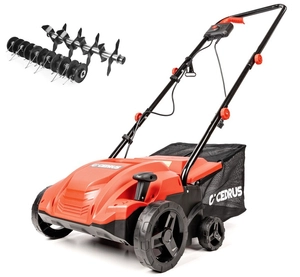
CEDRUS WE32 GREEN AREATOR 2-in-1 AERATOR + 2 ROLLERS 1500W / 32cm CEDWE32 - EWIMAX - OFFICIAL DISTRIBUTOR - AUTHORIZED DEALER CEDRUS
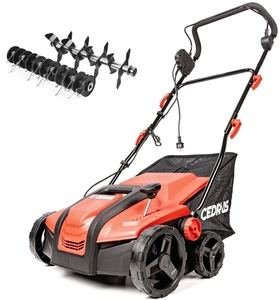
CEDRUS WE38 GREEN AREATOR 2-in-1 AERATOR + 2 ROLLERS 1800W / 38cm CEDWE38 - EWIMAX - OFFICIAL DISTRIBUTOR - AUTHORIZED DEALER CEDRUS

CEDRUS WE40 GREEN AREATOR 2-in-1 AERATOR + 2 ROLLERS 2000W / 40cm CEDWE40 - EWIMAX - OFFICIAL DISTRIBUTOR - AUTHORIZED DEALER CEDRUS
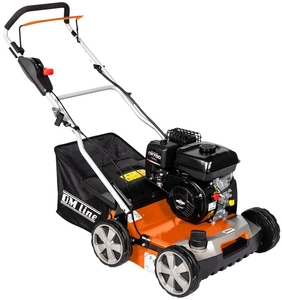
OLEO MAC OM-LINE WE40B SPRINAL VERTICULATOR AREATOR 2-in-1 FOR THE GROWTH 6 HP / 40cm B&S Briggs & Stratton CR950 PREMIUM OO-OTHWE40B OFFICIAL DISTRIBUTOR - AUTHORIZED DEALER OLEO MAC
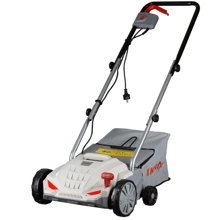
IKRA IEVL 1532 2-in-1 AREATOR THREAD TREATER + 2 ROLLERS 1500W PREMIUM POWER EWIMAX - OFFICIAL DISTRIBUTOR - AUTHORIZED IKRA DEALER

WEIBANG WB457AB SPRINKLING TURBLE 5 HP B&S Briggs & Stratton 750 Series WB457 / WB 457 lawn aerator EWIMAX - OFFICIAL DISTRIBUTOR - AUTHORIZED WEIBANG DEALER
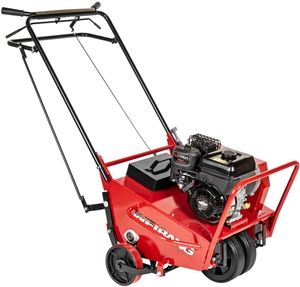
WEIBANG WB517AB SPRINKLING RUBBLE 5 hp B&S Briggs & Stratton 750Series WB517 lawn aerator EWIMAX - OFFICIAL DISTRIBUTOR - AUTHORIZED WEIBANG DEALER
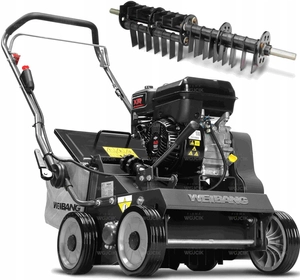
WEIBANG WB384RB PROFI PROFESSIONAL STEADY COMPACT VERTICULATOR Briggs&Stratton WB384 WB 384 EWIMAX - OFFICIAL DISTRIBUTOR - AUTHORIZED WEIBANG DEALER

CEDRUS WR01 SPRELINER TREATER AREATOR 2-in-1 5.5 HP - EWIMAX - OFFICIAL DISTRIBUTOR - AUTHORIZED DEALER CEDRUS
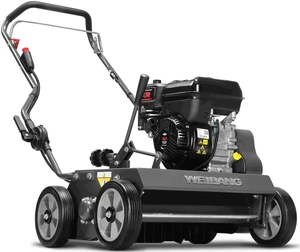
WEIBANG WB486CRB PROFI PROFESSIONAL COMPACTIONAL GRANDFULATOR Briggs&Stratton WB486 / WB 486 - EWIMAX - OFFICIAL DISTRIBUTOR - AUTHORIZED WEIBANG DEALER

CEDRUS SP31130 GARDEN ROLLER WITH WHEELS AERATOR FOR TRAKTOR 122cm - OFFICIAL DISTRIBUTOR - AUTHORIZED DEALER CEDRUS
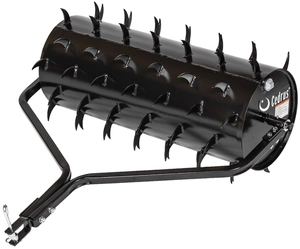

OLEO MAC SCA 38 R DIESEL LAWN SCARIFIER PREMIUM METAL HOUSING 1800792 OFFICIAL DISTRIBUTOR - AUTHORIZED OLEO MAC DEALER

OLEO MAC OM-LINE WE40L 5.5 HP / 40cm PREMIUM METAL CABINET OO-OTHWE40L OFFICIAL DISTRIBUTOR - AUTHORIZED DEALER OLEO MAC

CEDRUS SP31519 AERATOR AREATOR GARDEN FERTILIZER SEED PLACER 2in1 - Poj. 80 L / 103 cm
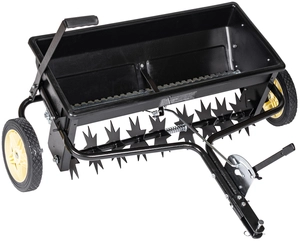
CEDRUS SP31509 AERATOR AREATOR GARDEN FERTILIZER SEED PLACER 2in1 - Poj. 43.5 L / 81 cm
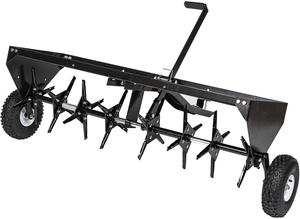
CEDRUS SP31102 GARDEN TRAKTOR PIPE AERATOR 122 cm - OFFICIAL DISTRIBUTOR - AUTHORIZED DEALER CEDRUS
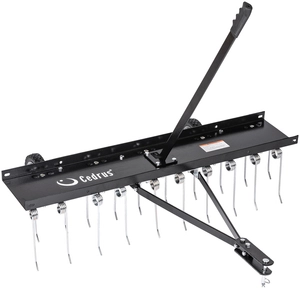

OLEO MAC SCA 50 H HONDA SPRINIONAL VERTICULATOR FOR THE GARVARD AREATOR 5.5 HP / 50cm 1800796 PROFESSIONAL - OFFICIAL DISTRIBUTOR - AUTHORIZED DEALER OLEO-MAC
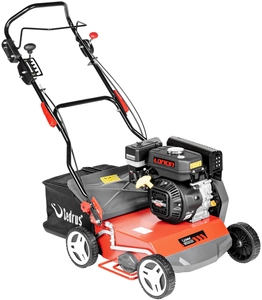
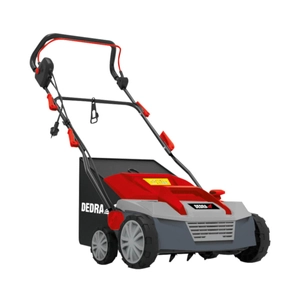
GARDEN DEDRA DED8706 1800W scarifier/aerator
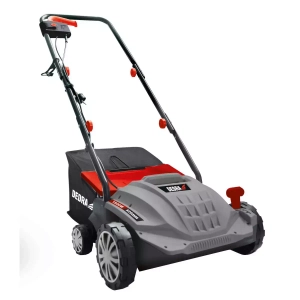
DEDRA DED8705 GARDEN AERATOR TREATER + 2 ROLLERS Power 1500W
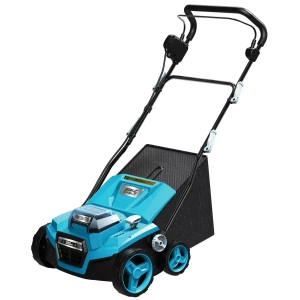
BRUSHLESS SCARIFIER/AERATOR 2X18V DEDRA SAS+ALL DED7196V
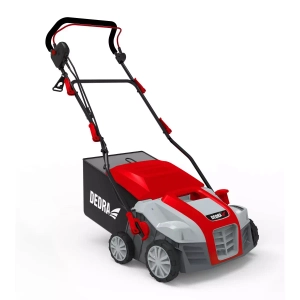
GARDEN DEDRA DED8686 2000W SCARIFIER/AERATOR

CEDRUS WR01-H SPRELINER TREE TILLER AREATOR 2-in-1 6 HP HONDA GP200 - EWIMAX - OFFICIAL DISTRIBUTOR - AUTHORIZED DEALER CEDRUS

CEDRUS WR01-B SPRELINARY THRESHOLDER AREATOR 2-in-1 6 HP B&S Briggs & Stratton CR950 - EWIMAX - OFFICIAL DISTRIBUTOR - AUTHORIZED DEALER CEDRUS
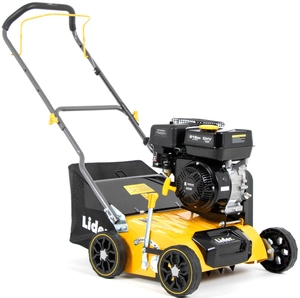
LIDER DKW40 SPRINKLER FOR THE GROWTH AREATOR 2in1 6HP - OFFICIAL DISTRIBUTOR - AUTHORIZED LIDER DEALER
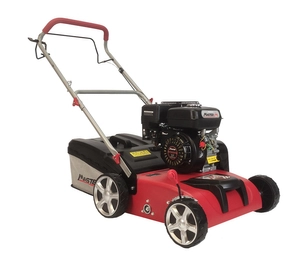
DIESEL SCARIFIER MASTERCUT SHLS380/M196 TWO ROLLERS

FAWORYT KCW1800 ELECTRIC TURF TREATER 2W1 AREATOR AERATOR + 2 ROLLERS 1800W / 40cm
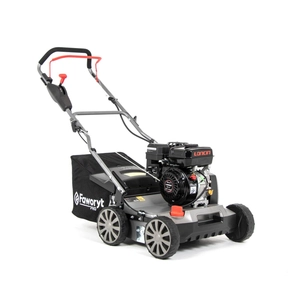
FAWORYT PRO RP40 L SPRINAL VERTICULATOR 2-in-1 5.5 HP REFRIGERATOR for lawns
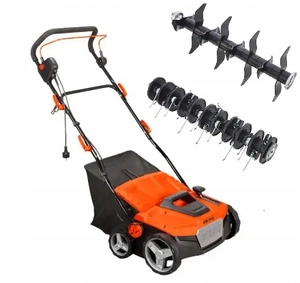
OLEO-MAC OM-LINE WRE1800 GREEN AERTICULATOR 2-in-1 + 2 WOLDS 1800W / 38 cm - OFFICIAL DISTRIBUTOR - AUTHORIZED DEALER OLEO MAC
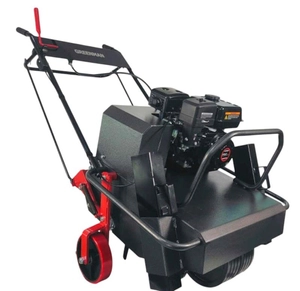
GREENMAN AE500 DIESEL LAWN AERATOR TUBULAR DRUM 500MM 80MM LONCIN G200F
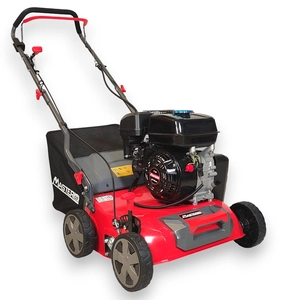
MASTERCUT TXW40/212 SPRINAL VERTICULATOR 2in1 6hp 2 shafts 40CM 212cm3 lawn aerator
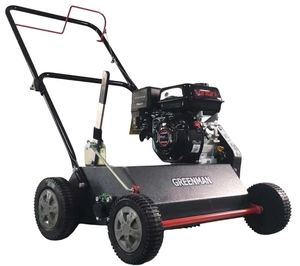
GEENMAN LYS46 PETROL LAWN SCARIFIER PROFI 46CM