How to Care for the Blades in a Branch Shredder? Maintenance, Sharpening, and Common Mistakes

Although the engine powers the wood chipper, it is the cutting mechanism that determines its actual performance.It is this factor that directly affects the chipping speed, the quality of the wood chips produced, and the durability of the entire machine.Regular maintenance of working components is particularly important today, especially when we expect high performance and trouble-free operation over many seasons.
Neglected blades quickly make themselves felt—the machine starts to work harder, consumes more fuel, and is more prone to breakdowns.That is exactly why it is so important to know when knives need servicing and how to perform it properly.Later in this guide, we explain what to look for when sharpening wood chipper blades, how to select the right blades for a specific model, when to check the manufacturer’s recommended sharpening angle for wood chipper blades, and when it is necessary to replace the blades in wood chippers, to ensure the safety and full operational efficiency of the machine.
Table of Contents:
- How to Tell When the Knives in a Wood Chipper Need Maintenance or Sharpening?Signs of worn or dull knives
- How to Properly Care for the Blades in a Branch Shredder?
- How and when to sharpen the blades on a wood chipper?
- When Is It Necessary to Replace the Blades in a Wood Chipper??
- The Most Common Mistakes in Maintaining Wood Chipper Blades
- How Does Knife Maintenance Affect the Service Life of the Entire Machine??
How to Tell When the Knives in a Wood Chipper Need Maintenance or Sharpening?Signs of worn or dull knives
Many people ask, “How do I know when the time is right?”?".The machine usually sends out warning signals on its own.If you learn how to interpret them, you'll avoid costly repairs to the entire drivetrain.
The main signs of dull knives are:
- Deterioration in the quality of wood chips.Instead of neatly cut “chips,” the wood chipper produces ragged, fibrous pieces of wood or even crushes branches.
- Lack of "self-tension".If your drum wood chipper suddenly stops feeding material on its own and you have to force each branch in, that’s almost certainly a sign that the cutting edge has lost its geometry.
- Increased vibration and noise.A dull wood chipper blade does not cut through the wood smoothly, but strikes it.This causes vibrations that can be felt throughout the machine's housing.
- Drop in engine speed.The engine has to exert much more effort during the grinding process, which results in smoke, a characteristic “choking” sound from the machine, or frequent jamming of the mechanism.
- Visible damage.When you open the cutting chamber, you see chips, rounded edges, or discoloration on the steel (a result of overheating).
How to Properly Care for the Blades in a Branch Shredder?
Regular maintenance of the blades in wood chippers can significantly extend the time between sharpening sessions.These are simple steps that take just a few minutes after you're done with your work.
Cleaning Knives After Work
Wood, especially softwood, contains resin that sticks to the blades when heated.A layer of dried resin hardens over time, increasing friction and causing the steel to dull more quickly.After each use, it's a good idea to wipe the blades with a cloth dampened with a small amount of resin solvent or a multi-purpose cleaner such as WD-40. A clean blade means less resistance and a lower risk of corrosion while the machine is parked in the garage.
Regular inspection of the condition of the blades
Before you start working, take a look inside (with the engine off and the spark plug cap removed, of course)!).Check the edges for any "chips" caused by contact with stone or metal.It is also important to check the mounting screws.The blade shaft on a wood chipper is subjected to enormous loads—a loose bolt is a recipe for disaster and the destruction of the entire cutting mechanism.

How and when to sharpen the blades on a wood chipper?
Sharpening is a precise process.It's not just about the knife being sharp, but about it maintaining its technical specifications, such as balance and cutting angle.
How often should you sharpen the knives on a wood chipper??
There is no single golden rule like “once a month”.It all depends on the type of material.If you’re mainly grinding clean, soft wood (linden, pine), the blades will last much longer than when working with dry oak, hornbeam, or branches covered in sand (e.g., from roadside clearing).. It is generally accepted that focus checks should be performed every 10–20 hours of operation.
How to Sharpen Knives in a Wood Chipper?
What is the correct sharpening angle for wood chipper blades??It is usually between 30° and 45° (check the manual for your model).
- Disassembly.Always remove the knives for sharpening."Machine" sharpening is imprecise and dangerous.
- Cooling.If you're using a sander, do so very gently.Overheating the steel (characterized by a blue tint) causes it to lose its hardness—the knife will become soft and dull after five minutes of use.
- Uniformity.You must collect the same amount of material from each knife in the set.Why?To maintain the shaft's balance.
Do-It-Yourself Sharpening or Professional Service?
If you have experience and a water-cooled low-speed grinder, you can try doing it yourself.However, in most cases, a professional tool sharpening service knows best how to sharpen wood chipper blades.They use magnetic surface grinders, which ensure perfect straightness of the edges and maintain consistent blade weight.

When Is It Necessary to Replace the Blades in a Wood Chipper??
Unfortunately, knives can't be sharpened indefinitely.Every time we collect material, we get closer to the point when replacing the blades in the wood chippers becomes necessary for safety reasons.
When to Buy New Blades?
- Deep chips.If the knife has struck a stone or a nail and the dent is deeper than 2–3 mm, attempting to “remove” it by sharpening may weaken the metal’s structure too much.
- Material consumption.Most manufacturers specify the minimum blade width.If the knife has become too narrow after being sharpened many times, the mounting screws may not hold it securely enough.
- Cracks.Any transverse cracks render the knife unusable.Such a component could break during operation, turning into a dangerous projectile.
When choosing new parts, check out the accessories we offer for branch chippers at and, where you’ll find specialized, hardened blades that fit your machine.
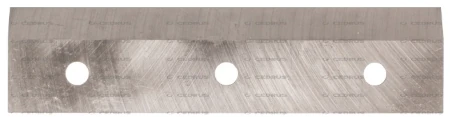
CEDRUS 500255 Cutting Blade for the RB05 Shredder
The Most Common Mistakes in Maintaining Wood Chipper Blades
Avoiding these few mistakes will save you hundreds of zlotys on replacement parts.
Working with Dull Knives
That's the cardinal sin.Users often think, “I’ll finish this pile of branches first, and then I’ll sharpen it.”.A dull knife forces the motor to operate at maximum load, which drastically shortens its service life and causes the drive belts to stretch.. It's better to stop working for 15 minutes and replace the blades with a spare set.
Improper sharpening or lack of balance
A common mistake is to sharpen only one knife from the set (the one that's most worn down).This causes the shaft to vibrate, which quickly damages the bearings in the wood chipper housing.If you're wondering what to use to make wood chipper blades yourself—we advise against it.The knives are made of specialized tool steel that has been properly hardened.Homemade replacements made from random pieces of steel may crack or bend, damaging the machine's interior.
How Does Knife Maintenance Affect the Service Life of the Entire Machine??
Regular maintenance of a wood chipper, with special attention to the blades, is a process that pays off.Sharp knives include:
- Lower fuel consumption.The machine runs smoothly without requiring excessive energy to "push" the wood.
- Longer Engine Life.The absence of sudden load spikes protects the crankshaft and the lubrication system.
- Protection of the drivetrain.The belts and centrifugal clutches do not slip because cutting resistance is minimal.
Keep in mind that high-performance wood chippers for branches are safer machines.A properly prepared blade grips the wood securely, minimizing the risk of dangerous branches being flung toward the operator.
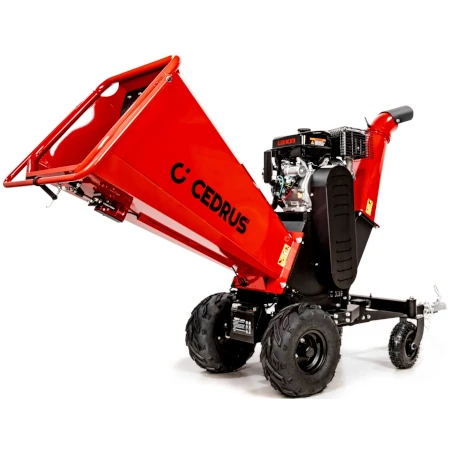
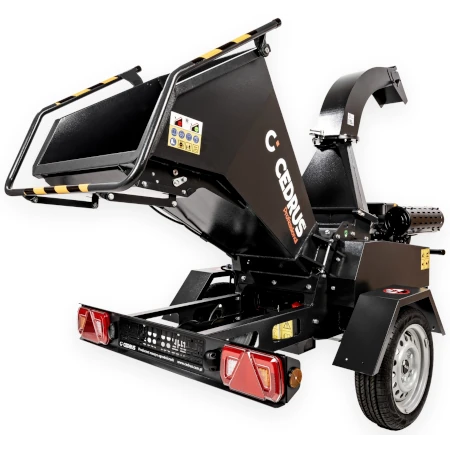
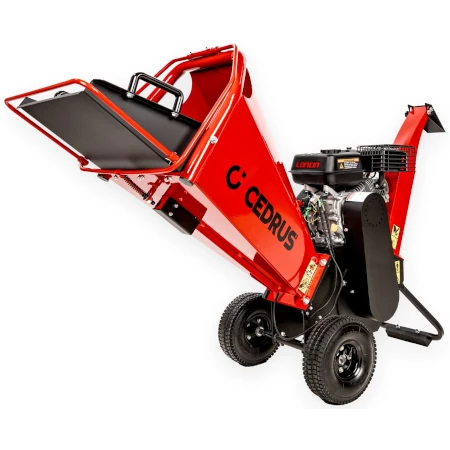
Investing in a second set of replacement blades is one of the best decisions a wood chipper owner can make.This ensures uninterrupted work while the first set is at a professional sharpening service.Well-maintained blades are the foundation for efficient and safe branch shredding over many seasons.
Your wood chipper has lost its former power, and the wood chips look ragged?Don't wait for a breakdown!Check out Ewimax's selection of knives and accessories and restore your machine to factory condition today.
Recommended

CEDRUS 500377 RB04 chopping blade knife - 1 piece - ORIGINAL - OFFICIAL DISTRIBUTOR - AUTHORIZED DEALER CEDRUS