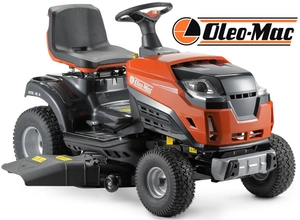
Side discharge tractor - is it the best solution for your lawn?

Having an extensive garden is the dream of many people, which is often confronted with the reality of regular and time-consuming maintenance. Mowing a lawn of several thousand square meters with a traditional push mower becomes a Sisyphean job, taking up precious hours that could be spent relaxing. There are many solutions available on the market to facilitate this task, and one of the most popular is garden tractors. However, they differ in the way they handle the cut grass: some collect it in a garbage can, others mulch it, and still others simply toss it aside. Each of these methods has its own unique applications and characteristics, and choosing the right machine can determine the satisfaction of using it for many years to come. Wondering if a side-discharge tractor is the best solution for your lawn? For owners of very large, natural or less frequently mowed areas, where the priority is speed of work rather than ideal aesthetics, the answer is yes, this is often the most efficient and economical option.
What exactly is side discharge mowing and when is it worth opting for it?
The mechanism of operation of the side discharge tractor is seemingly the simplest of all mowing systems, but its effectiveness under certain conditions cannot be overestimated. At its heart is a cutting unit in which one or more blades, spinning at high speed, cut blades of grass. Instead of directing the swath into a tunnel leading to a garbage can or grinding it into dust in the mulching process, this system uses centrifugal force to instantly eject the grass outward through a specially shaped channel, protected by a plastic or metal deflector. This uncomplicated design makes the side discharge mower tractor less prone to clogging, even when working with very dense and moist vegetation. Unlike hopper models, where wet grass can create blockages in the ejection tunnel, the side ejection system handles it without a problem, allowing you to mow even in less favorable weather conditions. This simplicity also translates into easier cleaning and maintenance of the entire cutting system.
The decision to choose this mowing technology should be dictated primarily by the characteristics of the area to be cared for. Side-dump tractors show their true capabilities in very large, open spaces with an area of more than 3,000-4,000 square meters. On such acreages as home meadows, extensive orchards, large recreational plots or informal parts of the garden, the main goal is to shorten the grass quickly and efficiently, rather than to achieve the effect of a perfect English carpet. Side ejection allows for continuous operation without having to stop to empty the heavy basket, dramatically reducing the total time needed to mow the entire area. The swath left on the surface in such conditions does not pose an aesthetic problem; on the contrary, as it decomposes, it gives valuable nutrients back to the soil, creating a natural fertilizer. Thus, it is ideal for those who appreciate the natural character of the garden and maximum efficiency of work.
There are situations in which a lawn tractor with side discharge becomes a virtually indispensable tool, outclassing other mowing systems. We are mainly talking about having to deal with a very neglected lawn or meadow, where the grass has grown to a height of several tens of centimeters. Attempting to mow such tall vegetation with a bin-collecting system would end up clogging it after just a few meters, and mulching would be completely impossible, as the blades would not be able to properly shred such a large mass of vegetation. A tractor with side ejection can easily handle such tall grass, simply cutting it and tossing it aside, allowing you to quickly restore order to the plot. This makes it an excellent choice for owners of newly acquired, neglected properties or people who mow their grounds irregularly, such as every 3-4 weeks, allowing the grass to grow freely.
What are the biggest advantages and disadvantages of side discharge tractors?
The most frequently emphasized and undisputed advantage, which for many users is decisive, is the unparalleled speed and continuity of work. Not having to regularly stop the machine, dismount, dismantle and empty the often heavy and unwieldy grass catcher is a huge time and effort saver, especially on areas numbering in the thousands of square meters. You can fully concentrate on precisely driving the tractor, which translates into a much shorter overall mowing time. The simpler design of a tractor without a basket and a complicated swath transport system often also means a lower purchase price compared to models with similar power and working width, but equipped with a collection system. Fewer mechanical components also mean potentially lower failure rates and lower costs for potential repairs. What's more, the engine is not burdened with driving the turbine that assists in grass harvesting, which can translate into slightly lower fuel consumption and better use of available power for the cutting process itself.
Despite the numerous advantages, side-dump tractors also have disadvantages, the awareness of which is essential to make the right decision. The most important of these is the fact that the cut grass is left on the surface of the lawn. While this is not a problem in a meadow or orchard, it may not be acceptable on a presentable, carefully tended gazebo for aesthetic reasons. A thick swath makes it difficult to use the lawn for recreational purposes and can be carried into the house on shoes. With very frequent mowing without harvesting, there is a risk of the formation of so-called "felt," which is a compacted layer of dead organic matter that impedes the access of air, water and fertilizer to the roots of the grass. Another downside is the need for careful route planning. It is necessary to mow in such a way that the discarded swath does not land on flower beds, paths, driveway or terrace, which requires some skill and strategic thinking from the operator. Otherwise, after the mowing is completed, there is additional cleaning work to be done.
A common dilemma is the choice between side throwing and mulching, or grinding the grass. When comparing the two systems, it is important to understand their different purposes. Mulching is an ecological and nurturing process - very finely chopped grass falls to the bottom of the lawn, decomposes quickly and acts as a natural fertilizer. However, it requires very regular mowing (even twice a week during the peak season) and cutting no more than 1/3 of the blade height at a time. Mulching vs. side discharge is therefore a choice between systematic care and quick and forceful intervention work. Side ejection is much more tolerant - it allows for less frequent mowing and can handle taller grass, but does not offer the benefit of fertilization, and the swath left behind is much thicker and takes longer to decompose. However, many models of side-discharge tractors offer the option to buy a special mulching insert, allowing you to use both functions depending on your needs and the condition of your lawn.
What to look for when choosing a side discharge mower tractor?
The key component that directly affects productivity and uptime is the cutting unit and drive unit. When choosing the width of mowing, follow a simple rule: the larger the area, the wider the unit should be. For plots of up to 5,000 sq. m, the optimal choice would be a width in the 96-107 cm range, which will allow you to deal with mowing efficiently without too many passes. For even larger acreages, consider models with an aggregate width of up to 117 cm or more. Equally important is engine power, expressed in horsepower (hp). For flat terrain with not too tall grass, a single-cylinder engine of about 12-15 hp will suffice, but on undulating plots, with dense vegetation or planning to use additional attachments, a more powerful two-cylinder unit (18 hp or more) will be a far better choice for more stable operation and a greater reserve of power. Two-cylinder engines also have a higher operating culture and generate less vibration.
Comfort and smoothness of operation largely depend on the type of transmission used. Two solutions dominate the market: manual transmission and hydrostatic transmission. The manual transmission, similar to that of a car, requires the tractor to stop in order to change gear, which can be cumbersome on plots with numerous trees, shrubs or other obstacles that require frequent maneuvering. By far the more convenient and modern solution is the hydrostatic transmission. It works similarly to an automatic transmission, allowing smooth adjustment of forward and reverse speeds with one or two foot levers, without the need for a clutch. This allows you to fine-tune the pace of your work to suit the conditions of your lawn and makes avoiding obstacles intuitive and effortless. Although tractors with hydrostat are usually more expensive, the comfort and efficiency they offer fully compensate for the higher price.
When deciding to buy a machine worth several or several thousand zlotys, do not forget about practical aspects and long-term operation. Before choosing a particular model, it is a good idea to check the availability of authorized service and spare parts in your area. Choosing a tractor from a popular brand such as Stiga, Husqvarna, MTD, Cub Cadet or John Deere guarantees easy access to professional service and consumable parts such as blades, belts or filters. Robust steel frame, cast iron front axle or high-quality materials used in the construction of the cutting unit testify to the durability of the machine and its resistance to harsh working conditions. It is also worth noting the ergonomics - a comfortable, adjustable seat, a steering wheel that fits well in the hands and intuitively placed control levers have a huge impact on comfort during many hours of work in the garden.
Recommended
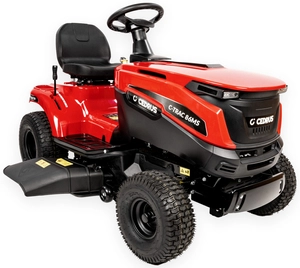
CEDRUS C-TRAC 86MS SIDEWALKING GARDEN TREATER WITH SIDE EJECTOR SPRINDING MOWER 86cm - OFFICIAL DISTRIBUTOR - AUTHORIZED DEALER CEDRUS
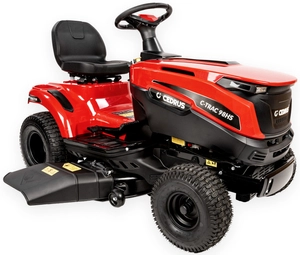
CEDRUS C-TRAC-98HS SIDEWALKING GARDEN TREATER HYDROSTAT / 98cm / 16 HP - OFFICIAL DISTRIBUTOR - AUTHORIZED DEALER CEDRUS

OLEO MAC OM 99L/12.5 hp lawn tractor with side-discharge cutter 68059201 98cm - OFFICIAL DISTRIBUTOR - AUTHORIZED DEALER OLEO-MAC

OLEO MAC OM 99L/14.5K SIDELINE DISPOSAL AND SIDE EJECTING GARDEN TILLER HYDROSTAT 98cm MOTORIZED PETROL MOW 68059202 - OFFICIAL DISTRIBUTOR - AUTHORIZED DEALER OLEO-MAC

OLEO MAC OM 108L/16 K SIDEWALKING GARDEN TREATER HYDROSTAT 108cm SPROTTING MOWER 68059203 - OFFICIAL DISTRIBUTOR - AUTHORIZED DEALER OLEO-MAC