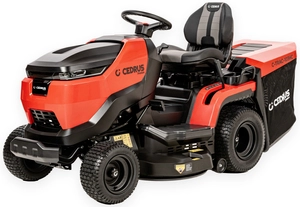
How to Prepare Your Riding Mower for the Season After Winter? Service Checklist
Spring is the time when the lawn comes back to life, and the riding mower returns to regular use after a few months of winter inactivity.However, before you start your first mowing session, it’s a good idea to know how to prepare your ride-on mower after winter to avoid breakdowns, starting problems, and unnecessary wear and tear on components.Low temperatures, moisture, and fluids that have not been used for a long time can negatively affect the condition of the engine, fuel system, and drivetrain.
Properly preparing your lawn tractor for mowing isn't just a matter of work comfort—it's, above all, an investment in the machine's reliability throughout the season.Properly checking the oil, battery, blades, and filters will ensure that starting your lawn tractor for the first time after winter goes smoothly, and you’ll avoid common problems with starting the engine.
If you're wondering how to start your lawn tractor after winter and what exactly to check before heading out to the lawn, the checklist below will guide you through the entire process step by step, just as a professional service technician would.
Table of Contents:
- Getting Your Riding Mower Ready for the Season – A Complete Step-by-Step Checklist
- Step 1 – Visual inspection and cleaning of the toy tractor
- Step 2 – Checking and Charging the Battery
- Step 3 – Checking and Changing the Engine Oil
- Step 4 – Checking the Fuel System
- Step 5 – Checking the Ignition System (Spark Plugs, Cables)
- Step 6 – Cleaning and Checking the Air Filter
- Step 7 – Checking the Wheels and Tire Pressure
- Step 8 – Checking the blades and the mowing deck
- Step 9 – Checking the drive belts and control cables
- Step 10 – Inspection of the Transmission (Manual/Hydrostatic)
- How to Start Your Tractor for the First Time After Winter?
- The Most Common Problems When Starting Up a Tractor for the First Time After Winter
- When Should You Take Your Tractor to a Professional Service Center??
Getting Your Riding Mower Ready for the Season – A Complete Step-by-Step Checklist
Before you start any work, make sure you have the basic tools, clean rags, new oil, and fresh fuel on hand.Remember to stay safe: Always disconnect the spark plug wire before performing any work on the blades.!
Step 1 – Visual inspection and cleaning of the toy tractor
Start by thoroughly cleaning the machine.Remove dust, cobwebs, and bits of dried grass from last season. Pay special attention to the area around the engine and the air intakes—sometimes rodents make their homes in hard-to-reach places over the winter, building nests out of leaves and paper, which can lead to engine overheating or a fire.Check to see if there are any oil stains under the tractor, which could indicate a leak.
Step 2 – Checking and Charging the Battery
This is the most common problem area after winter.Batteries lose their efficiency at low temperatures.How to Check the Battery on a Lawn Tractor?Use a multimeter—the voltage should be around 12.6V. If it is lower, you’ll need to charge the lawn tractor’s battery using a charger with a low-current charging function (preferably an automatic charger).. Clean the terminals with a wire brush and coat them with industrial petroleum jelly to prevent corrosion.
Step 3 – Checking and Changing the Engine Oil
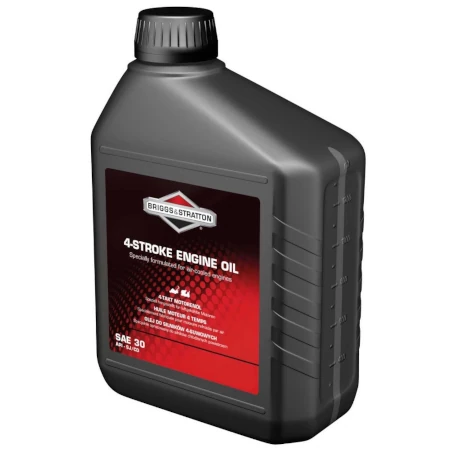
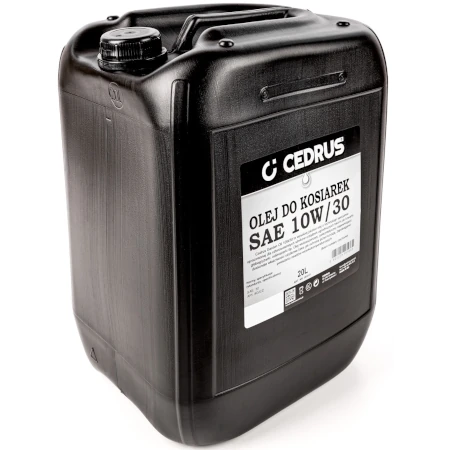
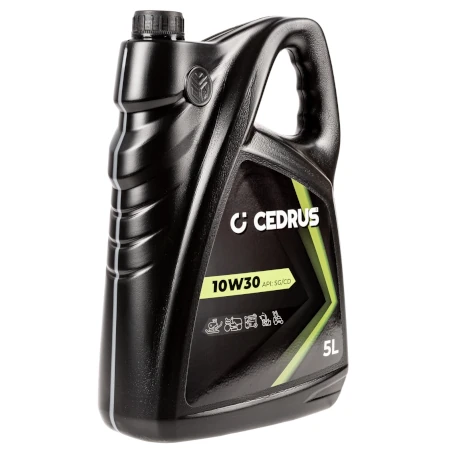
Even if the oil looked clean in the fall, it's a good idea to change it before the season starts.Water vapor may have condensed in the crankcase over the winter, which impairs the lubricating properties.Changing the oil in a lawn tractor is absolutely essential.Choose the engine oil recommended by the manufacturer (usually SAE 30 or 10W30). Be sure to replace the oil filter while you're at it, if your model (e.g., a CEDRUS) is equipped with one.
Step 4 – Checking the Fuel System
Fuel that is more than 30 days old loses its properties and may cause deposits to form in the carburetor.If you didn't drain the tank before winter and didn't add a stabilizer, it's best to siphon out the old fuel and refill the tank with fresh PB95 gasoline.. While you're at it, check the condition of the fuel filter; if it looks cloudy or you can see debris in it, replace it with a new one.
Step 5 – Checking the Ignition System (Spark Plugs, Cables)
Remove the spark plug and inspect its electrode.If it is black, sooty, or has a buildup on it, replace it with a new one—it’s a small expense, and it ensures that your lawn tractor will start up reliably after the winter.. Also check the high-voltage cable to make sure it isn't frayed or chewed by pests.
Step 6 – Cleaning and Checking the Air Filter
The engine "breathes" through the filter, and a clogged filter element drastically reduces power and increases fuel consumption.Replace the paper filters with new ones, and wash the sponge filters in soapy water, dry them, and soak them in a little fresh oil. A clean filter is essential for stable operation at a constant RPM.
Step 7 – Checking the Wheels and Tire Pressure
The tires on the lawn mower may have lost a little air over the past few months.Check the pressure with a pressure gauge—it should usually be around 0.8–1.2 bar (check the instructions on the side of the tire).Uneven tire pressure is the most common cause of uneven mowing!
Step 8 – Checking the blades and the mowing deck
Checking the blades on your lawn mower is the key to a healthy lawn.Dull blades tear at the grass, causing it to turn yellow.If you notice any nicks, take your knives in to be sharpened and balanced.
Cleaning the underside of the lawn mower deck is just as important—remove any old grass clippings and check for rust.It is a good idea to apply a preservative at this point.
Step 9 – Checking the drive belts and control cables
Inspect the V-belts for the blade drive and the travel mechanism.Check for cracks, abrasions, and delamination. A belt that breaks halfway through mowing a large garden is a major problem.Also check to see if the brake and throttle cables move smoothly—use lubricant spray if necessary.
Step 10 – Inspection of the Transmission (Manual/Hydrostatic)
If you have a hydrostatic transmission, check the fluid level (if a reservoir is available) and the condition of the cooling fins on the transmission housing.They must be clean so that the oil doesn't overheat.For manual transmissions, check that the gears engage smoothly.
How to Start Your Tractor for the First Time After Winter?
Once the checklist has been "checked off," it's time for the moment of truth.How to start a lawn tractor after winter without flooding the spark plug or overloading the starter?
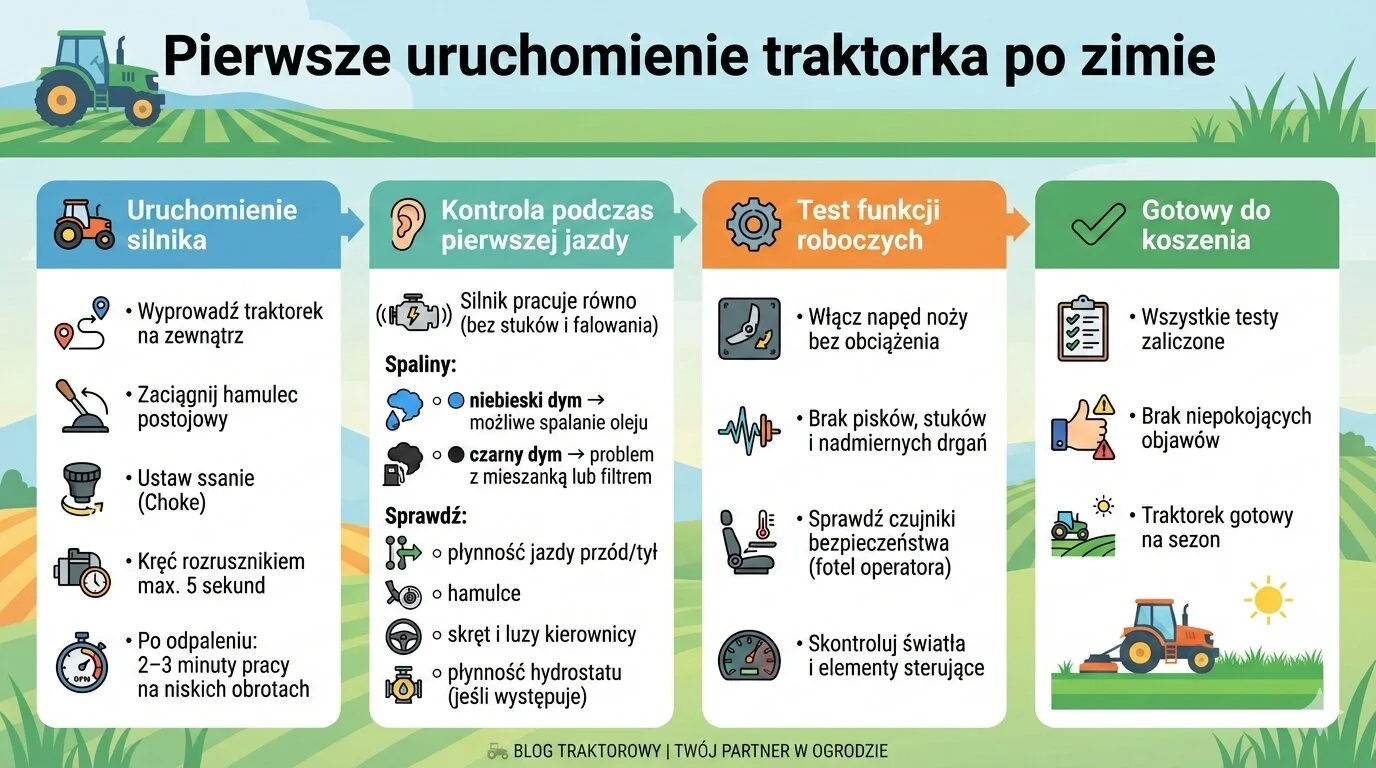
Step-by-Step Engine Start-up Procedure
- Take the tractor outside—never start it in a closed garage.
- Apply the parking brake and set the throttle lever to the "choke" position..
- Turn the key in the ignition for no more than 5 seconds.If the engine doesn't start, wait half a minute so that the battery"rested".
- Once the engine starts, let it run at low RPM for 2–3 minutes so that the oil reaches all the lubrication channels.
What to Look Out for on Your First Drive?
The first drive after winter is the moment when the tractor “shows” what kind of shape it’s in after the break.First and foremost listen to the engine as it runs — it should run smoothly, without fluctuations in RPM, metallic knocking, or stuttering.Pay attention to the exhaust fumes:
- blue smoke may indicate oil burning,
- black smoke usually indicates a problem with the fuel-air mixture or a dirty air filter.
Make a few slow trips back and forth, gradually increasing your speed.Check the effectiveness of the brakes, throttle response, and steering precision — the steering wheel should not feel stiff or have excessive play.If you have a hydrostatic transmission, check to see if the tractor accelerates smoothly and doesn't "jerk" when changing direction.
Test all functions before you start mowing
Before you start mowing, perform a quick test of all key operating functions.Engage the mower deck on short grass or for a brief moment without a load, checking to see if the mechanism starts up smoothly, without squeaking, knocking, or excessive vibration.Unusual noises may indicate worn belts or problems with the bearings.
Check the operation of all safety devices and sensors, especially the operator presence sensor.The engine should shut off when you get out of the seat while the mower is running..Also, make sure that the lights, warning signals, and control levers are working properly.
Only after passing these tests is the mower fully ready for regular mowing, without the risk of unexpected downtime during the season.
The Most Common Problems When Starting Up a Tractor for the First Time After Winter
Despite your best efforts, sometimes the lawn mower won't start after the winter.Here are the most common causes:
- A muffled sound or "clicking": a dead battery or corroded contacts.
- The starter motor turns, but the engine won't start: no fuel in the carburetor (use a spray starter to help it start), the fuel valve is closed, or the spark plug is faulty.
- Fuel is leaking from the carburetor: the needle valve is stuck due to deposits from old fuel.
- No response to the key: blown main fuse (often located near the battery or ignition switch).
When Should You Take Your Tractor to a Professional Service Center??
Performing maintenance on your lawn tractor yourself is very rewarding and saves you money, but there are situations where the help of a professional is essential.Use a professional service if:
- Do you hear metallic knocking sounds coming from inside the engine?.
- The hydrostatic transmission has clearly lost power (the tractor has trouble climbing hills).
- Despite the blades being balanced, the machine vibrates heavily.
- Have you noticed any leaks from areas you can't access (e.g., from under the shaft seal)?.
A regular, annual pre-season inspection of your tractor is the easiest way to avoid costly repairs in the height of summer, when repair shops have the longest lines.
Remember that you can find all the necessary accessories—such as fresh oils, filters, batteries, and blades for your machine—in the Ewimax product lineup.Well-maintained equipment doesn't just mean a beautiful lawn—it means, above all, the joy of working outdoors.
Recommended
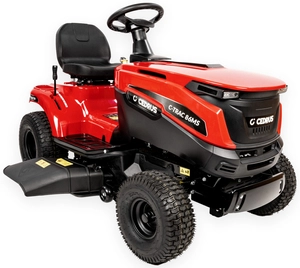
CEDRUS C-TRAC 86MS SIDEWALKING GARDEN TREATER WITH SIDE EJECTOR SPRINDING MOWER 86cm - OFFICIAL DISTRIBUTOR - AUTHORIZED DEALER CEDRUS
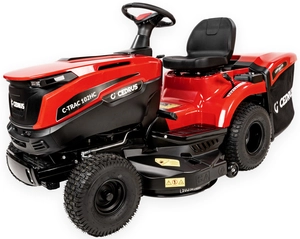
CEDRUS C-TRAC 102HC Rear-Dump Self-Propelled Lawn Mower HYDROSTAT 102cm 2 CYLINDRES C-TRAC-102HC EWIMAX OFFICIAL DISTRIBUTOR - AUTHORIZED DEALER CEDRUS
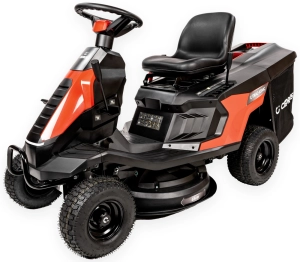
CEDRUS C-TRAC 65HC GARDEN TRACTOR RIDER LAWN TRACTOR SELF-PROPELLED LAWN MOWER HYDROSTAT LONCIN LC1P75F 7 KM 65 CM - OFFICIAL DISTRIBUTOR - AUTHORIZED CEDRUS DEALER