
How to Choose a Lawn Mower and Garden Tractor for Your Lot? A Practical Guide for Discerning Users
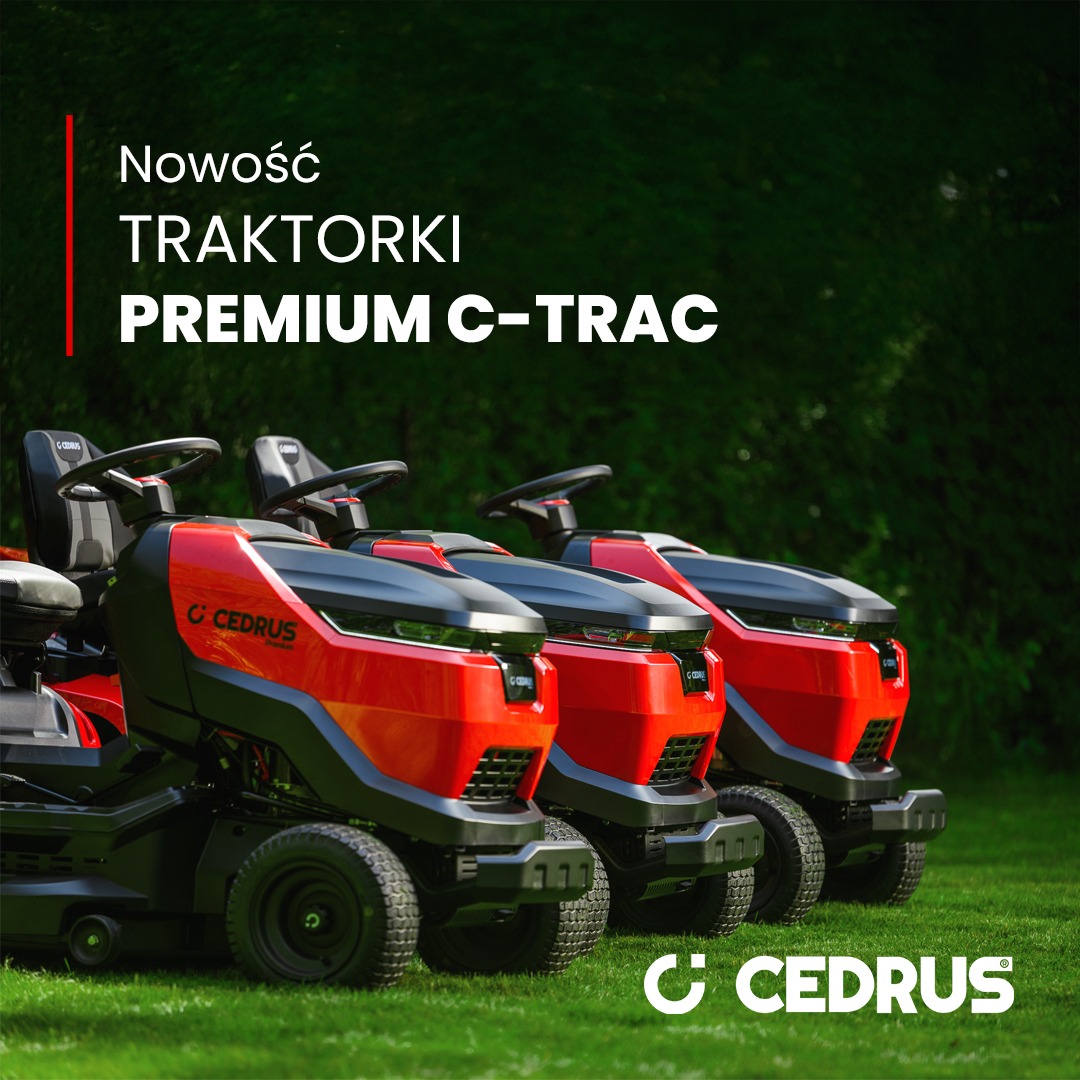
Choosing a lawn mower or garden tractor “tailored to a specific plot of land” is one of the most important equipment decisions a homeowner or owner of a larger property makes.The right choice affects not only the appearance of your lawn, but also your comfort while mowing, the time spent mowing, and the actual operating costs over the years.
This guide provides step-by-step instructions on how to choose a lawn mower and a garden tractor based on the size of your yard, the terrain, and your budget for ongoing use—not just the initial purchase.The text covers current trends (2024–2026) in gas-powered, electric, and battery-powered lawn mowers, as well as robotic mowers and garden tractors.
It’s worth noting that there are specialized distributors on the market, such as Ewimax (ewimax.pl) – an online store specializing in gardening and construction equipment, offering a wide selection of lawn mowers and lawn tractors, as well as expert advice on choosing the right equipment [1][2].In addition, the Ewimax website offers m.in.practical lists, such as the 2024 GARDEN TRACTOR RANKING – TOP 5 BEST MACHINES or overviews like “the best manufacturers of reel mowers” .
What does “a good lawn mower for your yard” mean??
A good lawn mower or garden tractor is a piece of equipment that:
- handles the lawn of the lawn (without “straining” the engine or the user),
- adapts to the terrain (slopes, obstacles, narrow passages),
- has acceptable operating costs (fuel/energy, maintenance, parts),
- ensures safety and ergonomics (comfort, safety systems),
- is tailored to the mowing frequency and the desired finish (e.g., mulching, bagging).
With this approach, the question is no longer “which lawn mower is the best?”?”, and becomes more precise: “How to choose a lawn mower and a garden tractor for my lot and my usage style”?"
Types of Lawn Mowers and Garden Tractors – An Overview
Corded Electric Lawn Mowers
Most commonly chosen for small, simple lawns.
Application:
- small urban gardens, plots of land for approx..300–500 m²,
- terrain that is as level as possible, with few obstacles.
Pros:
- low operating costs (electricity is cheaper than fuel; no oil or filters),
- Quiet operation, no exhaust fumes—ideal for densely built-up areas [3],
- lightweight, easy to maneuver.
Cons:
- The power cord limits the range and makes it difficult to mow around obstacles,
- not a good option for large areas – constantly having to reconnect the cable,
- problematic in very wet terrain (safety concerns).
Cordless mowers
A rapidly growing segment—especially in gardens for....500–800 m² [1][3].
Application:
- small and medium-sized gardens,
- users who value the convenience of a cordless design and lower noise levels.
Pros:
- No cord—the same freedom of movement as with a gas-powered model,
- quiet operation, no exhaust emissions, less vibration,
- low ongoing energy costs; for small lawns, the cost of a single mowing is usually just a fraction of a zloty.
Cons:
- limited operating time on a single charge (depending on battery capacity),
- the need to plan mowing (charging time),
- After a few years, the battery usually needs to be replaced (a significant expense).
Petrol mowers
Still a mainstay in the mid-sized and larger lot segment.Most commonly chosen for surfaces starting at approx..500 to 1,500–2,000 m² [1][4].
Application:
- medium-sized and larger lawns,
- more challenging conditions: taller grass, uneven terrain, gentle slopes,
- in places where there is no convenient access to electricity.
Pros:
- High power and performance—they can handle tall, thick grass,
- no cable and a longer runtime than with cheap rechargeable batteries,
- a wide selection of models (self-propelled, mulching, with a large grass catcher).
Cons:
- higher operating costs (fuel, oil, maintenance) [4][5],
- noisy operation and exhaust emissions,
- greater mass, potentially harder to maneuver without propulsion.
Mowing robots
Self-propelled devices that, once properly programmed, mow the lawn automatically.
Application:
- gardens with a relatively simple layout, featuring a separate lawn area,
- users who want to automate mowing almost entirely.
Pros:
- minimal user effort,
- very regular mowing—the lawn often looks better than when mowed occasionally with a traditional mower,
- low unit costs of electricity.
Cons:
- higher purchase and installation costs (boundary wire, charging station),
- limitations on very steep slopes and when the obstacle layout is extremely complex (although newer models are handling this better and better) [6],
- the need for servicing and maintenance of the blades.
Garden Tractors (Ride-On Mowers)
Equipment class for large areas: from approx..2,000–3,000 m² and up, up to several to over ten thousand m² [4][7].
Application:
- large home gardens, estates, recreational lots,
- areas surrounding businesses, institutions, sports fields, and orchards.
Pros:
- Very high performance – cutting width of 80–120+ cm, high operating speed,
- significantly less physical effort (the user is seated),
- expandability (trailer, snow plow, roller, aerator—depending on the model),
- Specialty stores such as Ewimax offer a variety of lawn tractor models—ranging from compact to semi-professional machines [1][2].The selection of a specific model can be supported by m.in.the latest 2024 ranking of garden tractors.
Cons:
- high purchase cost,
- higher fuel and maintenance costs than with a push mower,
- require sufficiently wide passageways and space to turn around.
Flail mowers (flail mulchers)
Specialized machines for extremely rough terrain.
Application:
- wastelands, neglected meadows, weeds, thickets,
- embankments, ditches, untrimmed road shoulders.
Pros:
- They can handle very tall, dense vegetation and even small twigs,
- often remote-controlled versions for slopes.
Cons:
- It's equipment designed for special tasks, not your typical "lawn" mower,
- higher purchase and operating costs, less precision in typical lawn mowing.
How to Choose Equipment Based on Lawn Size?
Many manufacturers and gardening websites provide approximate area ranges as a basis for selecting equipment [1][3][4].Below is a summary.
Typical area thresholds and recommended equipment types
| Lawn area | Recommended Equipment Types (Approximate) | Justification |
|---|---|---|
| up to 300 m² | corded electric lawn mower, cordless lawn mower, robotic lawn mower (small) | small area, easy to manage the cord, or short battery life |
| 300–500 m² | cordless lawn mower (with a better battery), electric lawn mower, small robotic lawn mower | The demand for convenience is growing, and there is still no need for an internal combustion engine |
| 500–1,000 m² | a more powerful cordless mower, a gas-powered mower (self-propelled), a mid-range robotic mower | More frequent mowing, more grass—this increases the requirements for power and working width |
| 1,000–2,000 m² | gas-powered lawn mower with self-propulsion and a wide blade, high-performance robotic mower, small garden tractor | A classic “medium-to-large” plot, where both power and working comfort matter |
| 2,000–4,000 m² | a garden tractor, a powerful gas-powered mower (if the terrain allows), a high-performance robotic mower (top-of-the-line) | large area – a push mower becomes time-consuming; a riding mower significantly reduces the time required |
| over 4,000 m² | garden tractor (often a higher-end model), tractor + additional equipment (e.g., a flail mower), or possibly a robot | We're moving into the semi-professional range—what matters is performance, bin capacity, and reliability |
In practice, the threshold for switching from a push mower to a riding mower often starts around 2,000–2,500 m², but on complex terrain and with infrequent mowing, a riding mower becomes worthwhile even sooner [4][7].
Tip: If, after mowing once with a standard lawn mower, you feel that it’s too much effort for you or takes 3–4 hours, consider a lawn tractor or a robotic mower as an investment in convenience and free time.
Terrain and Obstacles – How They Influence Your Choice?
Area alone isn't enough.The following also matters:
- slope of the terrain,
- the number and placement of obstacles,
- the width of the pathways between flower beds, trees, and buildings,
- type of surface (even turf, ruts, potholes, mounds).
Slopes and Embankments
- Push mowers (gas-powered/electric/battery-powered) – typically operate safely on slopes of 15–20° (approx..(27–36%), but be sure to check the manufacturer's recommendations.
- Lawn mowing robots – depending on the model, they can handle slopes of up to 25–45% (approx..14–24°) [6].For steep slopes, it’s worth considering models designed specifically for “slopes”.
- Garden Tractors – require great caution on steep slopes; manufacturers often specify maximum operating gradients in the manuals.
If the plot is very hilly, with steep slopes:
- The main, less demanding sections can be handled with a tractor,
- Steep, hard-to-reach areas – use a lightweight push mower, a string trimmer, or a specialized flail mower.
Obstacles and narrow passages
A large number of trees, flower beds, low walls, or garden furniture makes lighter, more maneuverable mowers (electric, battery-powered, or gas-powered models with a narrower cutting width).
This mini tractor is ideal for use in situations where:
- The passages between obstacles are at least several dozen centimeters wider than the width of the toy tractor,
- there are places to turn around (e.g., at the end of straight "strips" of lawn),
- The main sections of the lawn are relatively open.
A robotic lawn mower handles obstacles well if:
- are appropriately limited by a cable (or defined in wireless systems),
- We'll take care of the "technical transitions"—such as the width of the path between the flower beds.
Operating Costs: Gasoline-Powered vs. Electric vs. Battery-Powered vs. Lawn Tractors
When choosing equipment, users often focus only on the purchase price.Meanwhile, what matters are the full life-cycle costs: fuel/energy, maintenance, consumable parts, batteries.
Energy: Fuel vs. Electricity
Analyses by gardening websites show that:
- gas-powered lawn mower with a power of approx..To put it simply, it consumes about 2–3 kW.0.8–1 liter of gasoline per hour [4][5].With fuel prices in the range of a few zlotys per liter, the cost of one hour of mowing is a few to a dozen or so zlotys.
- an electric or battery-powered lawn mower with similar power will consume about.1–1.5 kWh of energy per hour.With energy prices at around.1 zł/kWh; the cost of one hour of labor is approximately 1–1.5 zł [4][5].
For small and medium-sized lawns electric/battery-powered mowers are cheaper to operate in terms of energy.For very large lawns, the cost of gasoline and electricity increases in proportion to operating time.
Service and Parts
- Internal-combustion engines – require regular oil changes, air filter replacements, spark plug replacements, and carburetor or fuel injection system inspections [4][5].This increases operating costs, but a well-maintained engine can last for over a dozen years.
- Electric, corded – virtually no motor maintenance costs (except for the possible replacement of mechanical parts: blades, drive belt, bearings).
- Battery-powered – no need for engine maintenance, but there’s the issue of battery aging.Typically, after a few seasons of heavy use, it needs to be replaced (a significant expense).
- Lawn mowing robots – blade replacement, periodic inspections, cleaning, and battery replacement after a few years.
- Tractors – similar maintenance requirements to larger internal-combustion machines: engine, transmission, and cutting system maintenance.The unit cost of the service is higher, but it is spread over a much higher throughput.
User Time
Time is also a cost.For large lawns:
- garden tractor can cut mowing time from 3–4 hours (push mower) to 1 hour or less,
- lawn mowing robot virtually eliminates the need for manual mowing (except for inspection and maintenance).
If your free time is valuable, the higher cost of buying a small tractor or a robot can quickly “pay for itself” in the form of hours saved each week.
Safety and Ergonomics – What to Look For?
Safety when working with cutting and combustion-powered machines is a priority.Whether you're choosing a lawn mower or a lawn tractor, it's worth paying attention to:
Key Safety Elements
- Blade brake / safety brake – the blade should stop quickly after the lever is released.
- Safety switches (so-called “dead man’s switch”) – the engine shuts off when the throttle is released.
- Guards and Deflectors – protect against flying rocks and other debris.
- In tractors:
- sensors that detect whether an operator is seated,
- knife lock during reverse operation (on many models),
- reliable brakes and easy-to-use control levers.
Ergonomics and comfort
- Working width – the wider it is, the faster you’ll finish, but the harder it is to maneuver in tight spaces.
- Drive Systems in Push Mowers – significantly improves comfort when mowing larger areas and uneven terrain.
- Cutting Height Adjustment – preferably central, with several to a dozen or so degrees of adjustment.
- Grass catcher capacity – a larger grass catcher = less frequent emptying; when you have a lot of clippings, you’ll appreciate every liter.
- In tractors:
- a comfortable, adjustable seat,
- ergonomic steering wheel and lever layout,
- clear control panel.
Specialty stores, such as Ewimax, often highlight features that improve comfort and safety (type of transmission, safety systems, grass catcher capacity, mulching features) in their descriptions of tractors and lawn mowers [1][2].You can find additional inspiration for choosing manufacturers, for example, in a guide on which reel mower manufacturers are the best.
A Step-by-Step Guide to Choosing a Lawn Mower and Garden Tractor?
Step 1: Measure and “map” the lot
- Estimate the total area of the lawn (excluding flower beds and paths—mowing areas only),
- Draw a simple map showing slopes, trees, narrow passages,
- Pay attention to the narrowest spotsthat the mower or tractor may need to pass through.
Step 2: Determine how often to mow
- If mowing is to be regular (every 5–7 days) —you can definitely consider robotic, cordless, and electric mowers (lower power requirements with minimal grass growth),
- if mowing is infrequent (every 2–3 weeks or less) — for tall, thick grass, gas-powered models or more powerful lawn tractors work better.
Step 3: Decide how important comfort is compared to the purchase price
- low initial budget, small lawn – corded electric lawn mower,
- Moderate budget, convenience is important, medium-sized lawn – a battery-powered or gas-powered self-propelled mower,
- a strong emphasis on comfort, a large lawn – lawn tractor,
- maximum automation – robotic mower (with an optional “touch-up” mower).
Step 4: Determine your preferred mowing technique
- Collecting in the trash can – perfect for high-profile lawns when you want to keep things clean.
- Side discharge – a good option for large, less formal areas that aren’t mowed very often.
- Mulching – shredding and leaving grass clippings on the lawn; reduces the need for fertilizer but requires regular mowing.
Many manufacturers offer 3-in-1 or 4-in-1 mowers and lawn tractors (grass catcher + discharge + mulching + sometimes rear discharge).Ewimax offers garden tractors and lawn mowers that allow you to switch between operating modes, making it easier to adapt them to your lawn and the time of year [1][2].Rankings—such as the 2024 garden tractor rankings—can help you make a decision. .
Step 5: Check the availability of service and parts
- Choose equipment from brands for which you can easily find warranty and post-warranty service,
- Make sure that consumable parts (blades, belts, filters) are readily available,
- Take advantage of the advice offered by a specialty store—for example, Ewimax consultants can help you choose a machine while taking into account the availability of parts and service in your area [1][2].
Practical Pre-Purchase Checklists
Checklist: How to Choose a Lawn Mower for a Small or Medium-Sized Lot
Lawn area:
☐ up to 300 m²
☐ 300–500 m²
☐ 500–1,000 m²Access to electricity:
☐ Outdoor outlet near the garden
☐ No convenient access (consider a gas-powered model)Topography:
☐ fairly flat
☐ gentle hills
☐ Steep slopes (check the permissible gradients)Obstacles:
☐ Few trees/flower beds
☐ Lots of trees/flower beds/narrow passages (maneuverability is important; narrower width)Power supply preferences:
☐ Quiet operation and no exhaust emissions (electric/battery-powered/robot)
☐ Power and the ability to handle tall grass are priorities (gas-powered)Features:
☐ trash can
☐ mulching
☐ wheel drive
☐ Single-lever cutting height adjustment
Checklist: How to Choose a Lawn Tractor?
Lawn area:
☐ 2,000–3,000 m²
☐ 3,000–5,000 m²
☐ over 5,000 m²Width of driveways and gates:
☐ min.1 m
☐ 1.2–1.5 m
☐ more than 1.5 mLocation:
☐ mostly flat
☐ slight inclines
☐ Steep slopes in places (may require additional equipment)Priority:
☐ Mowing as soon as possible
☐ Compromise: fast, but with a high-quality finish
☐ Versatility (towing a trailer, accessories)Service options:
☐ Service available within a reasonable distance
☐ The store offers after-sales support (e.g., Ewimax)Budget:
☐ Basic mower
☐ Better features (hydrostatic transmission, mulching, larger grass catcher)
☐ a "top-of-the-line" machine (for several to over a dozen thousand.m², semi-professional)
FAQ – Frequently Asked Questions About Choosing a Lawn Mower and a Lawn Tractor
1.Lawn Mower or Garden Tractor—Which One to Choose??
If the lawn is less than about.1,500–2,000 m², and the terrain isn’t very demanding; usually, a a push mower (electric, battery-powered, or gas-powered).
For areas over 2,000–2,500 m² , switching to a a garden tractor, especially when:
- Do you want to reduce the time it takes to mow,
- you value convenience (driving instead of walking),
- Do you plan to use the mini tractor for other tasks as well (trailer, plow, accessories)?.
2.What engine power is right for my lawn mower??
As a rough guide:
- Small lawns (up to 500 m²) – electric/battery-powered mowers, approx..1–1.5 kW is usually enough,
- medium-sized lawns (500–1,500 m²) – gas-powered mowers, approx..2–3 kW (3–5 KM) is standard [1][3],
- Large lawns (over 1,500 m²) – you may want to consider more powerful gas-powered mowers or riding mowers, which often have engine power ranging from 10 to 18 KM and above [2][7].
It's always a good idea to check the manufacturer's recommendations regarding the maximum recommended surface area for a given model—this is often a better indicator than the power rating alone.
3.How to Choose the Working Width of a Lawn Mower or Riding Mower?
- small gardens (up to 300–400 m²) – 30–40 cm wide,
- medium (500–1,000 m²) – 40–50 cm,
- larger (1,000–2,000 m²) – 50–55 cm or more (gas-powered mowers),
- small tractors—typically 80–120 cm; the larger the area and the more open the terrain, the wider the implement makes sense.
Take into account the narrowest passages and the spaces between obstacles—the machine’s width must allow for easy maneuvering and turning.
4.Can a robotic lawn mower replace a traditional lawn mower??
On many plots—yes.A robotic lawn mower works great if:
- The lawn has fairly distinct boundaries and isn't overly fragmented by flower beds,
- Do you agree to regular, frequent mowing (the robot often mows several times a week),
- You can take the time to install and configure the system.
In practice, many users keep a simple lawn mower or trimmer for trimming hard-to-reach areas and for occasional “cleanup,” such as after a garden renovation.
5.Which is cheaper to operate—a gas-powered lawn mower or an electric one??
Looking solely at energy costs, electric and battery-powered mowers are usually cheaper: they consume energy that is several times cheaper per hour of operation than gas-powered mowers [4][5].
However, for larger areas, the following must be taken into account:
- battery life and the possible purchase of additional batteries,
- the cost of replacing the battery after a few years,
- the difference in the purchase price of the device.
That's why, on small and medium-sized plots, electric/battery-powered models are usually cheaper and more convenient, while on very large plots, powerful gas-powered mowers or lawn tractors.
6.Where to Find Professional Advice When Choosing a Lawn Mower or Lawn Tractor?
The best places to shop are specialty stores and distributors of gardening equipment.For example Ewimax (ewimax.(pl) focuses on gardening and construction equipment, offering:
- a wide selection of lawn mowers (gas-powered, electric, and battery-powered) and lawn tractors from reputable brands,
- rankings and guides (e.g., 2024 garden tractor comparisons and articles on which manufacturers of reel mowers perform best),
- assistance in selecting equipment for a specific area and working conditions [1][2].
This makes it possible to tailor the machine not only to the “specifications in the catalog,” but also to the actual way it will be used.
Summary
The decision on how to choose a lawn mower and a garden tractorshould be based on three key factors:
Lawn area – determines the device class:
- till about.500–800 m² – electric/battery-powered mowers,
- 500–2,000 m² – gas-powered mowers (often self-propelled) or high-performance battery-powered mowers,
- 2,000+ m² – lawn tractors, possibly supplemented by robotic mowers.
Terrain and Obstacles – affect:
- the choice between a lightweight lawn mower and a heavier lawn tractor,
- the need for additional equipment (trimmer, flail mower),
- Permissible gradients and required maneuverability.
Operating Costs and Comfort:
- electric and battery-powered – lower energy costs, greater acoustic comfort,
- Gas-powered tractors and utility tractors – higher power and performance, at the expense of fuel and maintenance costs,
- robotic lawn mowers – save a great deal of time, but come with a higher purchase price and require regular maintenance.
Before making a purchase, it’s a good idea to go through the checklists, measure your yard, consider how often you’ll mow, and decide how important convenience and time are to you.Next, consult a specialty store such as Ewimax, which offers a wide range of lawn mowers and garden tractors, as well as professional advice on choosing a machine tailored to your conditions and expectations [1][2].Specific lists, such as the current 2024 ranking of garden tractors, can also serve as a good starting point for such a conversation. .