


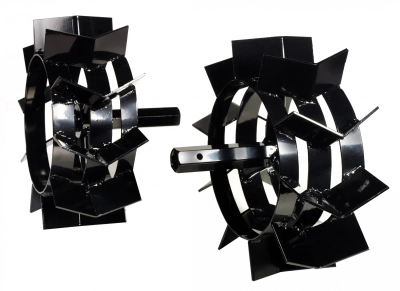
METAL WHEELS FOR MH197 /198 SOIL PLANTER 69209116

- Metal wheels for the MH197 / MH198 soil tiller 69209116 for maximum traction, stability and performance on heavy, wet and loamy soil. Ideal for intensive gardening and agricultural work.

METAL WHEELS FOR MH197 / MH198 Soil Compactor 69209116 - maximum grip, stability and performance in all conditions
Metal wheels for the MH197 / MH198 soil tiller 69209116 is a robust, professional work accessory designed for intensive work in the garden, orchard, greenhouse and field. They replace standard rubber wheels or working blades in situations where significantly greater traction, handling stability and effective penetration of the machine into compact soil are needed. With its strong welded steel construction and clever blade geometry, the wheels provide excellent track holding, reduce slippage and improve operator safety during heavy tillage operations.
Metal wheels designed for use with the MH197 and MH198 soil tiller.
TOTAL WHEEL DIAMETER - 37.5CM / 15"
WHEEL WIDTH - 24.5CM / 10"
What are metal wheels for MH197 / MH198 soilers 69209116 and why you should have them?
METAL WHEELS FOR MH197 /198 TILLER 69209116 is a specialized set of working wheels made entirely of durable steel, designed to work with MH197 and MH198 soilers. Unlike traditional rubber wheels, the working surface of these wheels is armed with strong, wide blades and teeth that bite into the ground. As a result, the machine does not slip on soft or wet soil, and the operator has full control over the trajectory and depth of the tillage tools.
The metal wheels are ideal for users who want to maximize the potential of their tiller - whether in small home gardens, ROD plots or on farms. They will work great during:
- primary and secondary tillage of heavy, clayey and compacted soils,
- working on wet soils where rubber wheels tend to slip,
- pulling additional accessories (e.g. seeders, plows, small garden trailers).
The use of steel and solid construction translates into very high resistance to mechanical damage, as well as long, trouble-free operation. This is an investment for years, especially for those who regularly prepare larger acreages for sowing vegetables, lawns or ornamental plants.
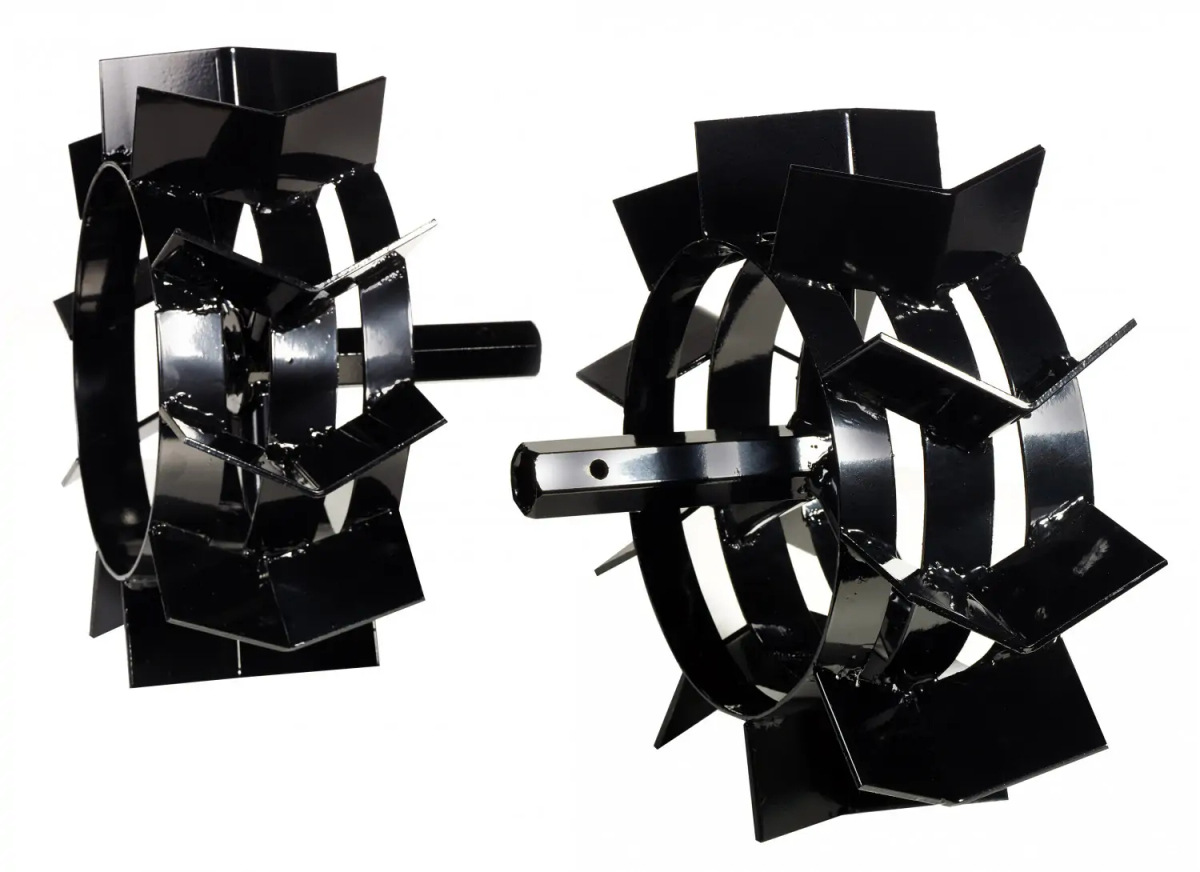
Where are the METAL WHEELS for the MH197 / MH198 soil compactor being installed 69209116 and how the installation is done?
The metal wheels are mounted directly on the drive axle of the MH197 or MH198 soil tiller in place of the standard wheels or workpieces provided by the manufacturer. By fitting to a specific model, installation is quick and easy - no modifications, drilling or specialized tools are required, just a basic wrench to secure the mounting bolts or screws.
The use of metal wheels in place of rubber wheels instantly changes the nature of the machine's operation from a light, maneuverable tiller to a very stable, firmly ground-holding cultivating unit. Appropriate wheel diameter - 37.5 cm (15") - ensures that the drive force is properly translated into progressive movement, while helping the tiller more easily overcome uneven ground, furrows and freshly shaken soil.
The wheels are mounted:
- on both sides of the drive axle of the tiller, ensuring symmetrical loading,
- in a working configuration, when planning heavier treatments - deep loosening, plowing, and sowing,
- in place of standard tires when the terrain is muddy, sloping or heavily corroded.
Example use scenario: preparing beds for potato cultivation on moist, heavy soil, the user removes the serial wheels, installs the MH197 / MH198 metal working wheels, then installs the backfiller. Configured in this way, the set-up allows the machine to be guided confidently and evenly along the rows, without the risk of slippage and with perfectly straight furrows.
The use of metal wheels MH197 / MH198 - full control on difficult terrain
The primary purpose of the METAL MH197 /198 Soil Compactor Wheels 69209116 is to provide maximum traction and stability in conditions where rubber wheels fail. Profiled blades and tines made of steel bite into the ground, so that even on a steep slope or in a waterlogged garden, the tiller maintains traction and safe handling.
Practical applications include m.in.:
- Tilling heavy soil - Preparing clay soil for sowing vegetables, digging perennial beds, breaking up compacted clods after winter.
- Working in humid terrain - After rain, near ponds, on low-lying plots where classic wheels or working blades alone slip and make it difficult to maintain a straight track.
- Support work with attachments - Pulling small trailers, single- or double-shank plows, seeders, coulters or cultivators. Increased traction allows you to use the full power of the soil planter engine, without the risk of "digging in place".
In everyday use, the metal wheels also make it easier to maneuver on unpaved driveways, pass between beds or in the orchard. The user does not have to worry about puncturing the tire, sinking into the mud or over-compacting the soil in one place - the blades evenly distribute the pressure while stabilizing the machine.
METAL WHEELS FOR MH197 / MH198 Soil Compactor - solid steel construction and technical specifications
A key advantage of the wheels is their refined technical design. The use of thick steel and solid welds makes the set ready for intensive, long-term use in harsh field conditions. The lacquered surface protects the metal from corrosion, increasing durability and making it easier to keep the wheels clean after use.
Key specifications:
- Model: METAL WHEELS FOR MH197 /198 SOIL PLANTER 69209116
- Purpose: cooperation with the MH197 and MH198 soil tiller
- Total diameter of the wheel: 37.5 cm / 15"
- Wheel width: 24.5 cm / 10"
- Material: painted steel, welded construction
- Wheel type: working wheels with blades (metal "pin"/tooth wheels)
- Working Purpose: increase the traction and stability of the machine on different types of soils
Such dimensions and design guarantee an optimal balance between weight and maneuvering comfort. The wheels are wide enough to provide stability even on uneven surfaces, but still maintain the mobility needed to work between beds or in narrow garden passages.
In practical use, steel wheels work well, for example, at:
- systematically prepare a large vegetable garden for spring and autumn,
- loosening the soil for planting fruit bushes,
- maintenance of loose soil structure in plastic tunnels and greenhouses.
User benefits - efficiency, safety and time savings
When you choose METAL WHEELS FOR SOILGARDER MH197 /198 69209116, you are not only investing in additional equipment, but above all in the comfort and efficiency of your daily gardening work. Increased traction means less effort in driving the machine, especially on inclines and in difficult, heterogeneous terrain. The ripper does not "run" sideways, does not sink into soft soil, and the operator has full control over its movement.
The most important benefits from the user's point of view:
- Saving time - you will prepare even large areas for cultivation faster and more efficiently, without having to go over the same places repeatedly.
- Less fatigue - A stable, well-handled machine requires less force to steer, which is especially important for the elderly or those working long hours.
- Better cultivation effect - Even, repeatable passes produce perfectly even soil, resulting in even plant emergence and higher quality yields.
An example from practice: during spring preparation work, the owner of a ROD plot with heavy, clayey soil can, thanks to the metal wheels, do all the cultivation in one weekend, without having to repeatedly correct the passes and without having to worry about the machine getting buried in the mud after the spring thaws.
FAQ - Frequently Asked Questions about METAL WHEELS FOR THE MH197 / MH198 SOILGRISER 69209116
1. Do these wheels fit other models of soilers than MH197 and MH198?
The wheels are designed to work with MH197 and MH198 soilers. Theoretically, they can also fit other models with the same diameter and type of axle, but before installation you should always check the compatibility of mounting dimensions. It is safest to use them with the recommended MH197 / MH198 models.
2. Does wheel installation require specialized tools?
Not. Assembly is carried out using basic workshop tools (wrenches, pins, pins). The design has been simplified so that the user can replace the wheels himself in a short time, without a visit to the service center.
3. On what soil do metal wheels perform best?
You will feel the biggest difference on heavy, wet, clay soils and on sloping terrain, where classic rubber wheels or the working blades themselves tend to slip. On dry, light sands, they also increase stability, but the advantage over tires is especially apparent in difficult conditions.
4. Do metal wheels damage turf or paving stones?
Due to the aggressive tread and sharp edges of the blades, it is not recommended to drive on paving stones, flagstones or other hard decorative surfaces. On grass, the wheels can heavily disturb the turf, so it is best to use them only in working areas - in the field, vegetable garden or orchard.
5. How to take care of metal wheels after the job is done?
When you're done, it's a good idea to remove soil and plant debris from the wheels, preferably with a brush and water. After drying, it is a good idea to inspect the condition of the paint coating - if scratches have formed, they can be spot-protected with anti-corrosion paint. Such simple maintenance significantly extends the life of wheels.
6. Does the set include two pieces of wheels?
As standard, a set of metal wheels designed for a tiller consists of two wheels mounted on both sides of the drive axle. It is always a good idea to check the exact contents of the kit in the offer description or in the product specifications in the store.
When you choose METAL WHEELS FOR THE MH197 /198 Soil Compactor 69209116, you get professional equipment that raises the capabilities of your machine to a whole new level. It's a reliable partner for everyday gardening and farming work, providing reliable performance in all field conditions.
WARRANTY TERMS AND CONDITIONS
For warranty terms and conditions, please refer to the instruction manual included in the device packaging. Devices covered by the extended warranty (3 and 5 years) require the execution of the mandatory warranty inspections (payable) at the times specified in the warranty terms and conditions.
The obligations of the guarantor under the guarantee are to repair the defective goods, the advertised device is not subject to replacement or cash back.
1. The manufacturer guarantees its products for a period of time:
- Oleo-Mac internal combustion mowers 60 months for consumer use and 12 months otherwise
- Oleo-Mac chainsaws, Oleo-Mac scythes, Oleo-Mac electric mowers, Oleo-Mac trimmers
TR 61 E and TR 91 E, garden tractors. EMAK K-series internal combustion engines powering mowers and
tractors 36 months for consumer use and in other cases 12 months
- Other devices for consumer use 24 months and in other cases 12 months
Additional consumer warranty on Briggs&Stratton engines after the expiration of the manufacturer's warranty period of 12 months -
The condition for maintaining the 36-month warranty period is to perform two paid inspections of the device at an authorized service center - in 12 and 24 month from the date of purchase no later than 7 days after the specified date.
As a condition for maintaining the 60-month warranty period, four paid inspections of the device must be performed at an authorized service center - at 12, 24,36 and 48 months from the date of purchase no later than 7 days after the appointed date. All inspections performed by the dealer must be recorded in the electronic
b2B guarantee settlement system. Internal combustion engines of other brands (Briggs & Stratton, HONDA, KAWASAKI, SUBARU, etc.).) and hydrostatic transmissions are covered by a separate warranty manufacturer. Details of the warranty terms and conditions are contained in separate manuals for the listed components.
2. The warranty covers all damages occurring during the warranty period resulting from the discovery of latent material defects during this period, assembly or technological.
3. The technical staff will proceed with the repair in the time allowed by organizational requirements, always as soon as possible.
4. The choice of how to remove the damage is up to the guarantor, who can remove the defect by repairing the device or replacing the damaged part. Regardless
way of removing the damage, the warranty continues, extended by the time of removal of the damage by the guarantor.
5. Warranty repair can only be carried out on the basis of the device registration in the B2B system or a valid warranty card with proof of purchase.
Failure to register the device, the warranty card or its cancellation will exclude the guarantor's liability under the warranty provided.
6. The user has the right to appeal against the decision of the service point regarding the qualification of the reported failure. The appeal must be submitted only in the form of in writing with a set of documents stating the course of repairs made and a description of the technical condition of the equipment at the time of the original inspection made by the service point.
7. The warranty period is extended by the time necessary for warranty repair. The dates posted on the claim in the b2B electronic guarantee settlement system.
8. The repair shop is required to make entries regarding the scope of warranty repairs in the B2B electronic warranty billing system.
9. For paid repairs performed, the guarantor provides a 3-month warranty on the condition that the repair is carried out in the guarantor's workshop and that the repair is used for the repair original spare parts. The basis for the claim is the proof of purchase of parts and the service performed.
10. Warranty repair is not subject to: damage caused by improper operation, damage caused by using the device for purposes for which it is not intended, damage caused by the use of improper consumables, mechanical damage, and
caused by improper transportation or storage, damage caused by lack of maintenance, components that have suffered wear and tear in service during proper operation.
11. The warranty is voided as a result of structural changes or modifications made by the user, as a result of interference found by the service point
inside the device by unauthorized persons, as a result of breaking or dismantling the carburetor adjustment locks, in the event that entries are found to have been made in the warranty card by unauthorized persons.
12. The warranty does not cover consumable items and items that wear out during the warranty period, such as:
- Consumable components, e.g.: cutting blades, discs, cutting bars, vee heads, filters, starter cables, spark plugs, bulbs, wheels, drums and clutch jaws,
clutches and friction discs, drive belts, safety bolts, cutting chains and guides, high-pressure washer lances.
- Engine components: cylinders, pistons, rings, crankshaft, bearings, pan, carburetor diaphragms.
- Other consumable parts: knife hubs, safety keyways, shock absorbers, bearings, pan, gears, overload fuses, carbon brushes, control ties and cables
- Starting batteries used in machines with an electric starter
- Components not mentioned in these warranty conditions , which obviously wear out during operation, transportation and storage (such as coating painting).
13. Warranty repair does not include installation, adjustment and maintenance activities.
14. Damage such as engine seizure, bent or cracked crankshaft, broken magnet wheel keyway or knife hub are not repairable warranty.
15. If the service center does not fulfill its obligations, the user is obliged to inform the guarantor of this fact. Refusal to comply repair by the service center must be entered in the warranty card. If the guarantor does not recognize the repair as a warranty repair, the cost of repair and transport is covered by the claimant.
16. Defective spare parts replaced under warranty repair are the property of the guarantor.
17. Complaint should be reported to the nearest authorized service center or directly to the guarantor. Reporting a complaint at the point of sale may cause an increase in repair time.
18. During the reception of the device after warranty repair, it is his duty to make sure that the received device is complete and undamaged. The repair point has the obligation to start the device before handing it over to the user after repair.
19. The service point has the right to charge a fee for performing maintenance activities that are the responsibility of the user and require them to be performed before the proceeding with the repair. The repair shop is obliged to replace, at the user's expense, all components that ensure the safety of the work, which have been damaged damage during operation regardless of the consent of the user.
20. A continuously updated list of service points can be found at www.victus.en
21. The warranty for the goods sold does not exclude, limit or suspend the buyer's rights under the warranty provisions for defects in the goods sold.
22. The cost of an unjustified complaint is paid by the complainant.
23. This warranty is valid in the territory of the Republic of Poland.
24. Any damage caused during transport should be immediately reported to the carrier under penalty of voiding the warranty.
25. The warranty does not cover possible damages caused directly or indirectly to persons or things due to defects in the device or resulting from prolonged downtime in the operation of the device.